Not All Labor Actions Aid the Working Class
There can be no successful left project without a rebuilt and revitalized labor movement at its heart. But that doesn’t mean that union militancy serves the interests of the larger working class in every possible context.
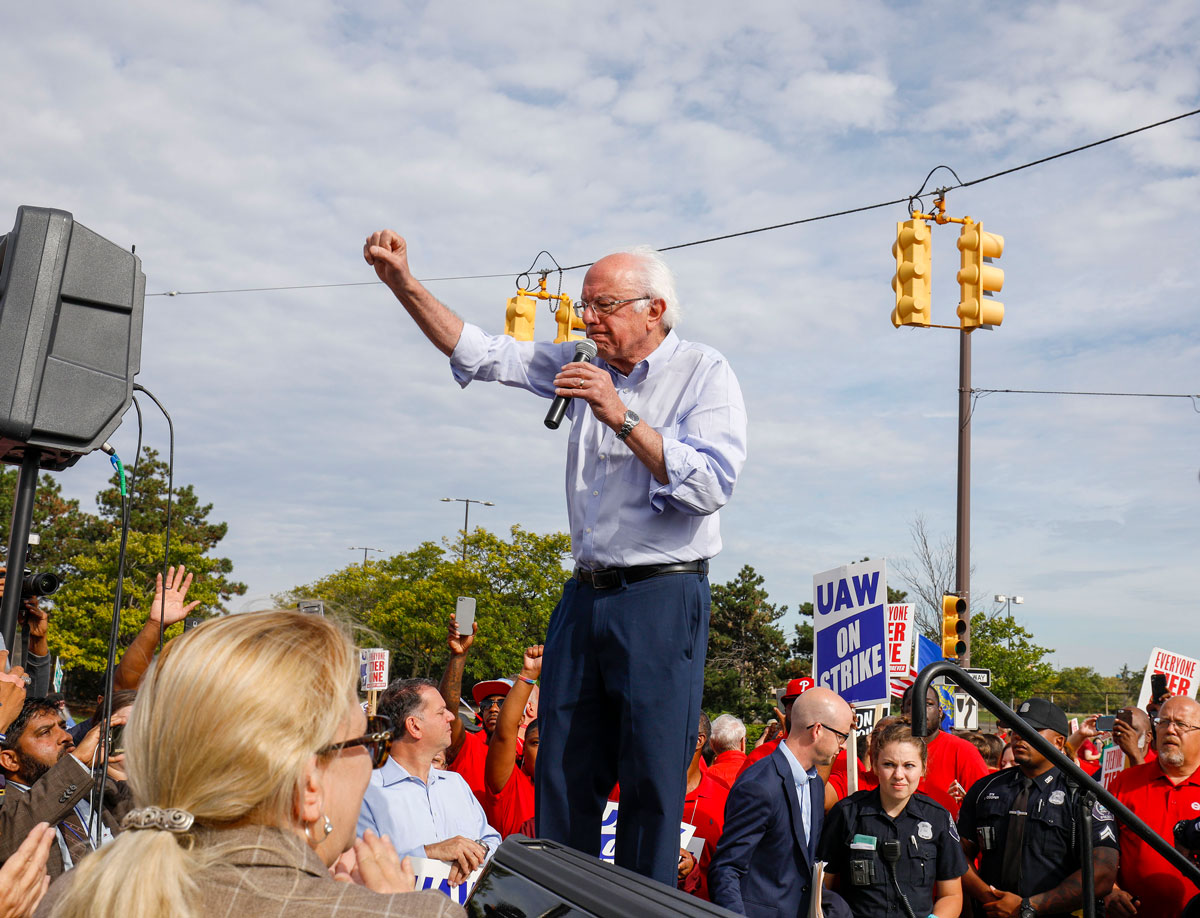
Democratic presidential candidate Sen. Bernie Sanders joins striking United Auto Workers union members as they picket at the General Motors Detroit-Hamtramck Assembly Plant on September 25, 2019 in Detroit, Michigan. (Bill Pugliano / Getty Images)
Dianne Morales’s mayoral campaign has blown up in the last few weeks over a labor dispute with campaign staff. That’s no great loss for progressive politics in New York City: Morales talked a good progressive game and even snagged the endorsement of the Working Families Party, but her record is wildly inconsistent with what she currently claims to stand for. As Ross Barkan put it, it’s at best an open question which Dianne Morales the city would get if her long-shot campaign succeeded: the one who supported charter schools and said she “probably” supported Andrew Cuomo against Cynthia Nixon in the state gubernatorial primary in 2018, or the one who now claims to stand for an “unapologetically progressive vision for the city.”
But let’s assume her politics are as good as the staffers and volunteers who back her think. If the Morales campaign really had been the best vehicle for achieving desperately needed reforms, would shutting that campaign down a few weeks before the primary have been a good idea? It’s hard to make sense of the views of the staffers who apparently believed both of those things.
Staffers staged a work stoppage weeks before the June 22 New York primary. Morales, whose ham-fisted intransigence surely exacerbated the situation, responded by firing dozens of staffers. She claims that some of their demands violated campaign finance laws.