The Legacy of Raúl Castro
Throughout his career, two misleading stereotypes distorted our view of Raúl Castro. He was neither a pale shadow of his brother, nor a one-dimensional pro-Soviet ideologue, but a major historical figure who played a key role in shaping the Cuban system and then reforming it.
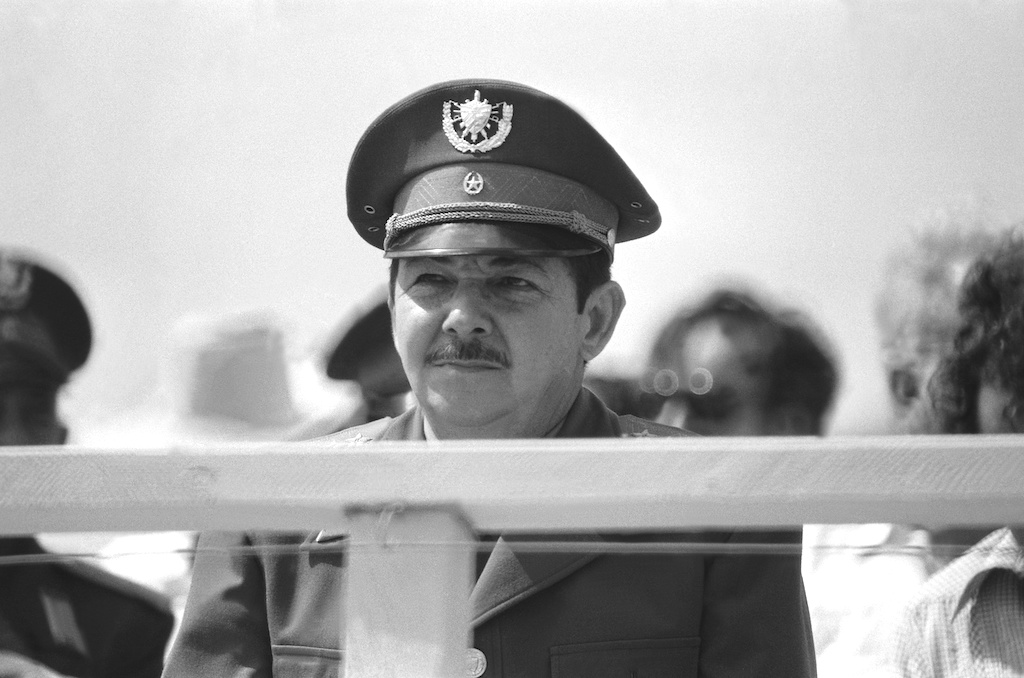
Raúl Castro attends the traditional May Day parade on Revolution Square in Havana, Cuba, 1978. (Francois Lochon / Gamma-Rapho via Getty Images)
On April 19, 2021, the Cuban Communist Party’s Eighth Congress finally brought an end to the political era of the Castros by electing Miguel Díaz-Canel Bermúdez, national president since 2018, as the party’s new first secretary. This move followed Raúl Castro’s confirmation on April 16 that he would stand down after two successive terms, as he had promised back in 2011.
While it came as no surprise that Raúl followed through on this pledge, having already done the same with the Cuban presidency in 2018, his departure nonetheless had symbolic importance, ending the “historic generation” of former guerrilla rebels in positions of authority. So at this moment of transition, what should we make of Raúl’s years in power, and of his overall importance in the trajectory and shape of the Cuban Revolution from 1959 onward?
Dynastic Legends
The reactions of the world media to the party’s changeover were predictable, mostly dismissing Raúl as Fidel’s younger brother and shadow, and seeing his leadership within the misleading framework of a North Korea–style Castro dynasty. Indeed, by 2008, when the National Assembly elected Raúl as president, the “dynasty” notion was just the latest in a long line of stereotypes that had accumulated from the early 1960s onward about the Cuban Revolution and its leadership.