The Anti-Colonial Revolt Was Key to Lenin’s Vision of Revolution
The Russian Revolution enthused anti-colonial movements around the world, fueling hopes that the European empires could be overthrown. But the revolt against empire was also fundamental to Lenin's own strategy, as he worked to unite workers’ revolts in the metropoles with national struggles to end colonial exploitation.
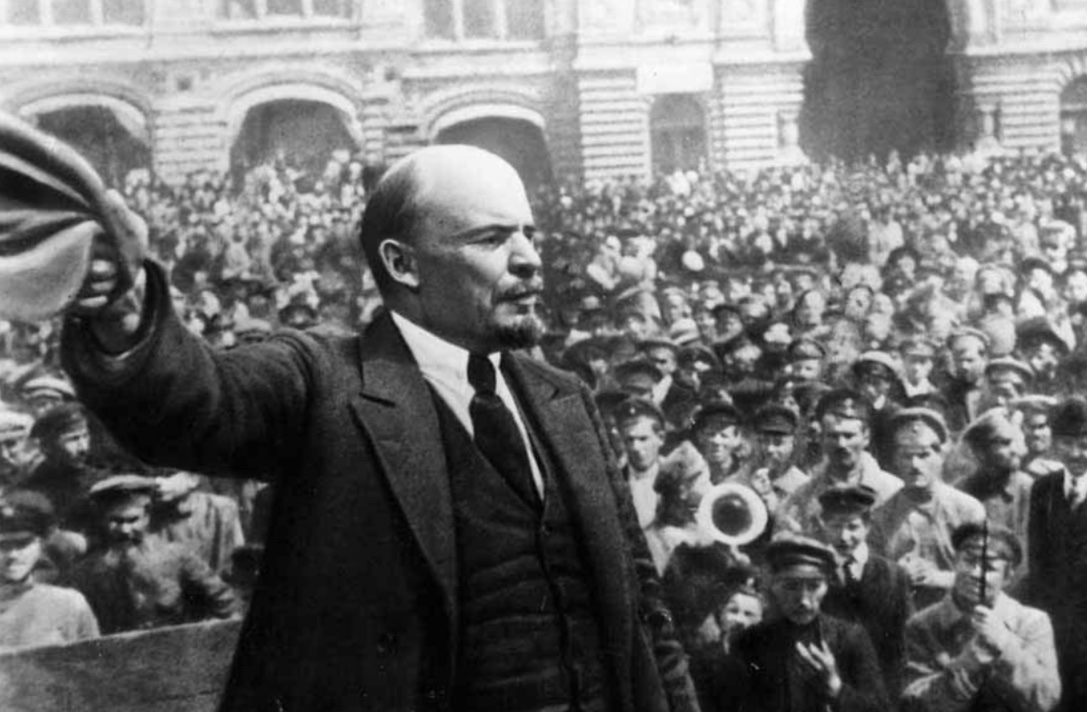
Lenin wanted the Russian Revolution to spread to Germany, but he wanted it to spread to India, too.
In Paris in 1920, a young migrant worker found employment toiling in hotel kitchens and painting trinkets. When he had a free hour, he dipped into basement bars to attend socialist meetings. These were heated and divided times: the loosely unified French workers’ movement was being torn apart by the Russian Revolution and the sharply competing socialist approaches to it. In one of these meetings, someone passed our migrant worker a copy of Vladimir Lenin’s new Draft Theses on National and Colonial Questions.
In that text, written as part of a debate in the young Communist International, the leading light among Russia’s revolutionaries set out an uncompromising anti-colonialism. Indeed, this marked a line in the sand between Bolshevik militancy and all those moderate European socialists who equivocated on questions of empire. Like so many others from Peru to India, this young itinerant worker was electrified. “What first drew me to Leninism?” he asked years later. He answered in a single word: patriotism. He would become known to the world as Ho Chi Minh: leader of the Vietnamese struggle against France and then the United States, and a face adorning banners on every continent.
Empires and Catastrophes
If Lenin’s name is overwhelmingly associated now with gray monuments, an authoritarian state, and its complement in a conspiratorial party, much that he represented has become buried treasure. So much of the language of the radical 1960s and 1970s, from feminist criticism of the oppressive regulation of sexuality and reproduction to talk of a capitalist world system and its exploitative underdevelopment of poorer nations, harked back to a previous revolutionary moment in the 1910s and 1920s.