In Honduras, the Right Is Permanently Locking in Its Abortion Ban
In a country that is already home to some of the worst restrictions on women’s rights, the Honduran Congress voted last month to lock in its bans on abortion and gay marriage, making them almost impossible to overturn. It’s a reminder that, as the feminist green tide washes over much of Latin America, there is still much work to be done.
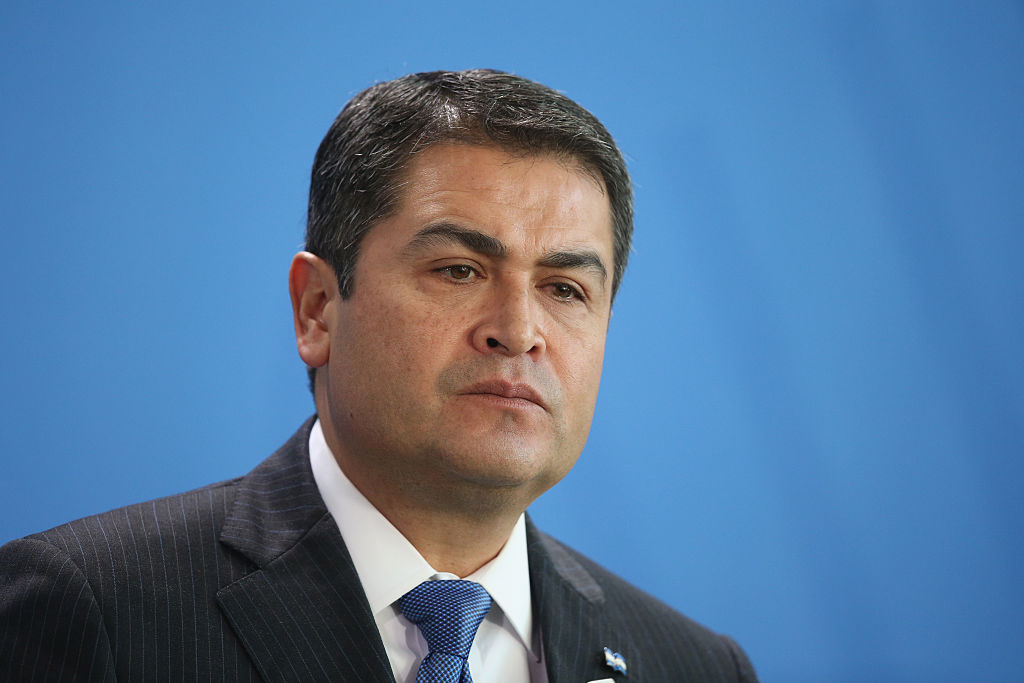
Honduran President Juan Orlando Hernández in 2015. (Sean Gallup / Getty Images)
On January 28, on the heels of Honduran Women’s Day (January 25), the far-right Nationalist Party–led Congress dealt a blow to feminists, LGBT people, and countless Hondurans who believe in equality and human rights. With little notice and virtually no public input, the Congress voted to amend the constitution by enshrining the “right to life at conception” and by instituting a narrow definition of marriage as “between a man and a woman.” Rushing the vote along partisan lines, normal rules of procedure were suspended, and even advocates closely following these issues were blindsided by the alacrity of the fundamental change to the nation’s most important document.
These reforms are a reflection of the Honduran right’s preoccupation with eradicating what neoconservatives around the world call “gender ideology,” a term used to propagate essentialist views of sex as defined along biological and binary lines. In this conservative framing, sexual and reproductive rights, transgender rights, and marriage equality are campaigns whipped up by ideologues that fundamentally go against human nature. The enshrining of these views in the constitution is sure to result in an increase in violence against women in a country facing one of the largest homicide rates in the world, including exorbitant evidence of gender killing. What’s more, the fact that the Congress could suspend due process to implement the constitutional amendments sets a worrying precedent.
“There Is Little Recourse for Appeal”
These kinds of regressive political moves have been typical of the presidency of Juan Orlando Hernández (who, since his election, has been linked to narco-trafficking in a federal court case in New York). Religious fundamentalists and Nationalist Party affiliates are gloating about their accomplishment. Though the attack on reproductive rights was to some extent expected, the anti-LGBT reform of article 112 has come as a surprise. Feminists and LGBT rights activists in Honduras are dismayed at the lack of due process involved. Congressional debate was all but absent and, what’s more, the minister for the National Institute of Women was absent. According to Indyra Mendoza, feminist and director of Red Lésbica Cattrachas: “In Honduras, it is easier to change an article of the constitution than to change an article of the penal code.”