A Rot in Honduras That Goes All the Way to the Top
A full investigation into the murder of Honduran indigenous leader Berta Cáceres doesn’t just uncover the story behind her assassination. It also provides a glimpse into the US-backed militarized narco-state of post-coup Honduras.
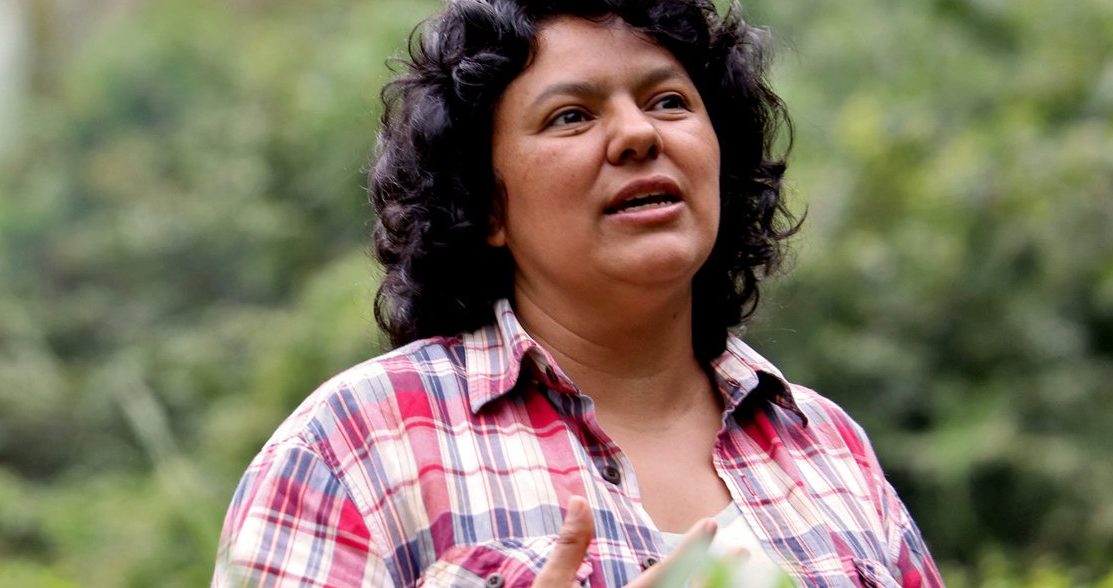
Berta Cáceres, Honduran environmental activist and indigenous leader, was murdered on March 2, 2016. Photo courtesy Goldman Environmental Prize
Near midnight on March 2, 2016, armed gunmen broke into Berta Cáceres’s house in La Esperanza, Honduras. She was shot three times. Mexican environmentalist Gustavo Castro, visiting for a workshop, played dead after a bullet went through his hand and mangled his ear. When the assassins left, Berta called out to her friend, who rushed to hold her as she died.
In a new book from Verso, Who Killed Berta Cáceres? Dams, Death Squads, and an Indigenous Defender’s Battle for the Planet, journalist Nina Lakhani recounts the events surrounding the murder of the celebrated movement leader. Part biography, part murder mystery, Lakhani’s research reveals the vast dimensions of the conspiracy to assassinate Berta, as well as the disturbing questions that continue to haunt the case.
Berta gained international renown after winning the prestigious Goldman Environmental Prize in 2015. But she was a lifelong radical. Berta participated in the Honduran national liberation struggles of the 1980s, resisted the country’s neoliberal reforms of the 1990s, and was a leader in the movement against the 2009 coup d’état that toppled president Manuel Zelaya and the ensuing authoritarian regimes. She spent her last days defending indigenous lands and waters from the imposition of a hydroelectric dam in Honduras’s Río Blanco community.