What Thomas Mann Can Tell Us About Defending Democracy
German novelist Thomas Mann spent most of World War II rallying the American people against Nazism and exhorting them to stand up for democratic values. Yet he also understood that no democracy can survive by culture alone — it also needs social justice to thrive.
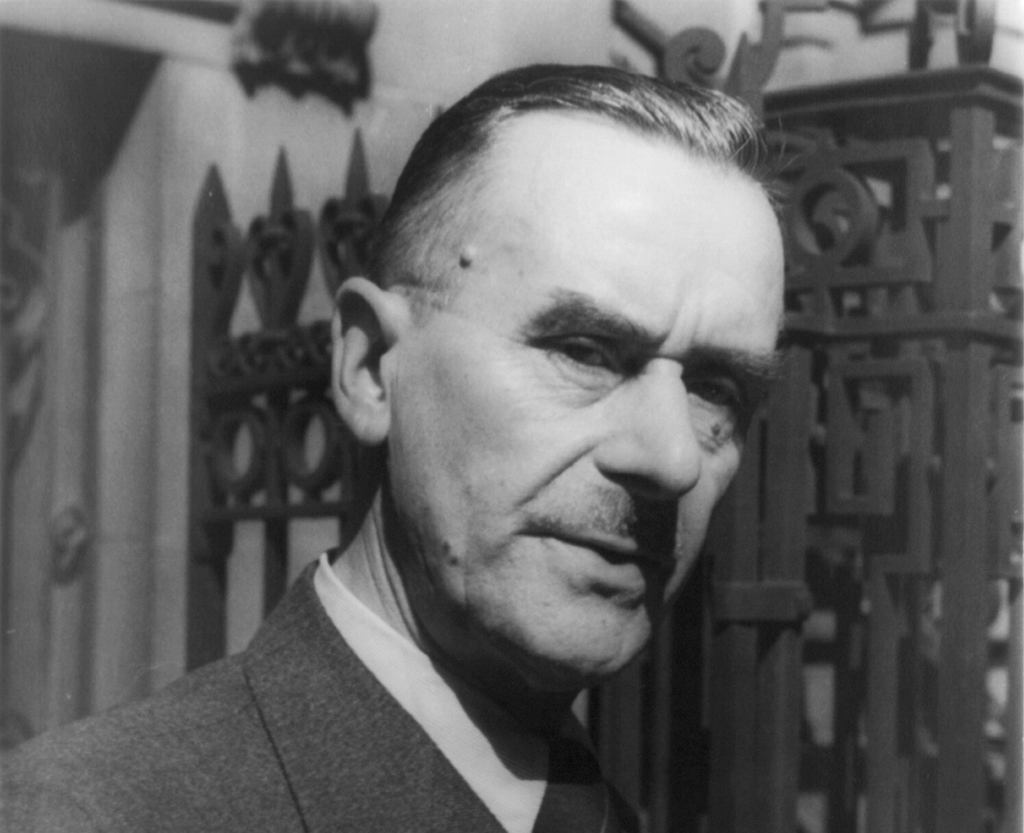
Thomas Mann on April 20, 1937. (Library of Congress)
When President Biden began his inaugural address by asserting that “today we celebrate the triumph . . . of a cause, the cause of democracy,” he sought to put an end to four years of anxious debates about the stability of the American political order. His triumphant proclamation may well turn out to be wishful thinking — for if democracy prevailed, it did so by a hair’s breadth. One shudders to imagine what might have happened if Republican election officials in Georgia or Arizona had buckled under the pressure exerted by their own party, or if the election had wound its way to a Supreme Court stacked with Trumpian appointees. In light of this narrow escape, even the mainstream press is now devoting column space to ways in which our political system might be made more robust: abolishing the filibuster, imposing term limits on federal judges, or even getting rid of the Electoral College.
Already in December 2016, Daniel Bessner and Udi Greenberg commented in Jacobin on the recent tendency among op-ed writers to compare the United States to the Weimar Republic, and to worry about the threat that Trumpism posed to the foundations of American democracy. Yet, as Bessner and Greenberg point out, attempts to “tyranny-proof” democratic systems carry their own dangers. In the German context, the experience of the Weimar years bred a new postwar generation of technocrats that was profoundly mistrustful of the masses, and eager to carry out the work of governing while shielded from public scrutiny.
President Biden seems unlikely to repeat this precedent. Although he served as vice president in what was arguably the most technocratic administration ever to govern this country, he is also proud of his folksy image as “Joe from Scranton,” and has supposedly instructed his closest advisors not to approach him with policy proposals that they couldn’t explain to their mothers. His inaugural address lacks even the slightest touch of wonkishness, and instead obsessively circles around emotional calls for national unity as the only remedy for what presently ails us.