John Sweeney: The Man Who Wanted to Be a “Big Labor” Leader
Despite the best efforts of former AFL-CIO leader John Sweeney, organized labor has continued its decline. Not only have we been politically defeated, but our very historical memory of struggle is under assault. We desperately need to find a way to make “big labor” truly big again.
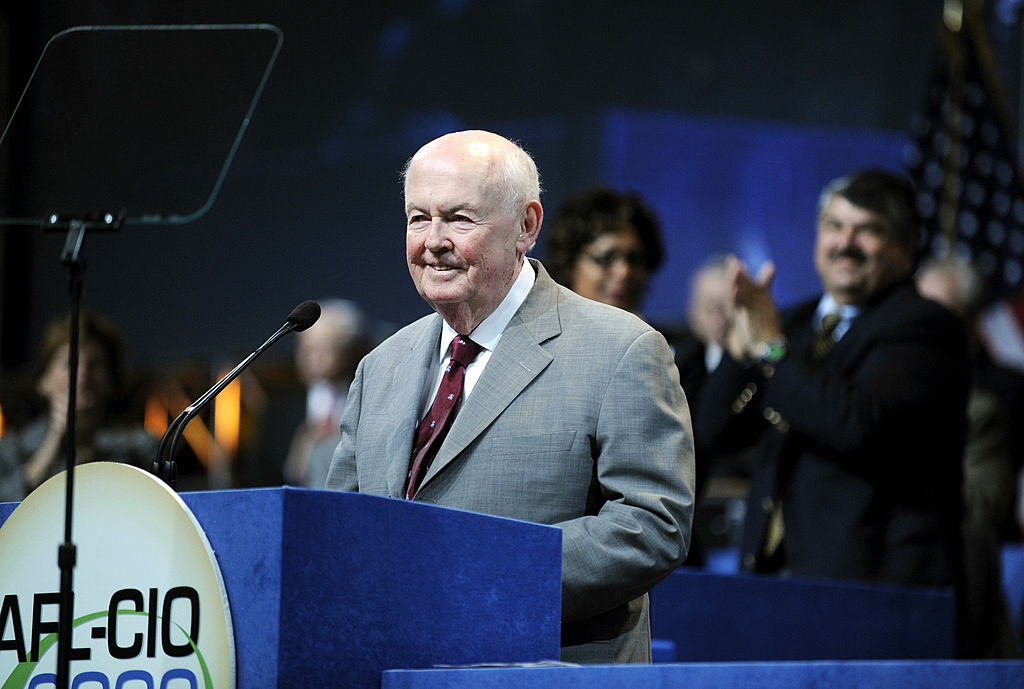
Outgoing AFL-CIO president John Sweeney speaks to members of the AFL-CIO at the organization’s annual conference in September 2009 in Pittsburgh, Pennsylvania. (Jeff Swensen / Getty Images)
John Sweeney, the president of SEIU and then the AFL-CIO, who died February 1, at the age of eighty-six, was a terrible public speaker. Sweeney had none of the emphatic eloquence of union leaders in US history like Eugene Debs, John L. Lewis, or Walter Reuther. A former colleague of mine when I worked in the labor movement as a comprehensive campaigner used to get lots of laughs behind closed doors with a witheringly unfair yet pitch-perfect imitation of a halting Sweeney glancing constantly at an index card that included essential reminders like the names of major unions.
But Sweeney had one great line that he delivered in pretty much every speech, and it always excited his audience. It went something like this: “The companies and the conservatives keep calling me a ‘Big Labor’ leader. All I can say is that it’s better to be a Big Labor leader than a small labor leader!” The wild cheering of union crowds when Sweeney spoke that line — usually, when I heard it, composed mostly of union staffers — was a tribute to the utopian aspirations it evoked in the labor movement’s segment of an ascendant, leftist professional managerial class fraction.
Union busters have used the phrase “Big Labor” for generations to evoke an authoritarian, subversive cabal of unions that was, most of all, powerful, a profound threat to capital. Sweeney reveled in owning, as a badge of honor, the anger and contempt he received from labor’s enemies. He sought to embody the large ambitions those enemies projected onto him.