Italy’s “National Unity” Government Is the Cutting Edge of Post-Democratic Governance
Mario Draghi's new Italian government has been hailed for uniting all political forces from the center-left to the hard-right Lega. Yet the adulation of the former European Central Bank chief as a "national savior" continues a trend elevating technocratic economic decisions above democratic choice — and it's working-class Italians who'll suffer.
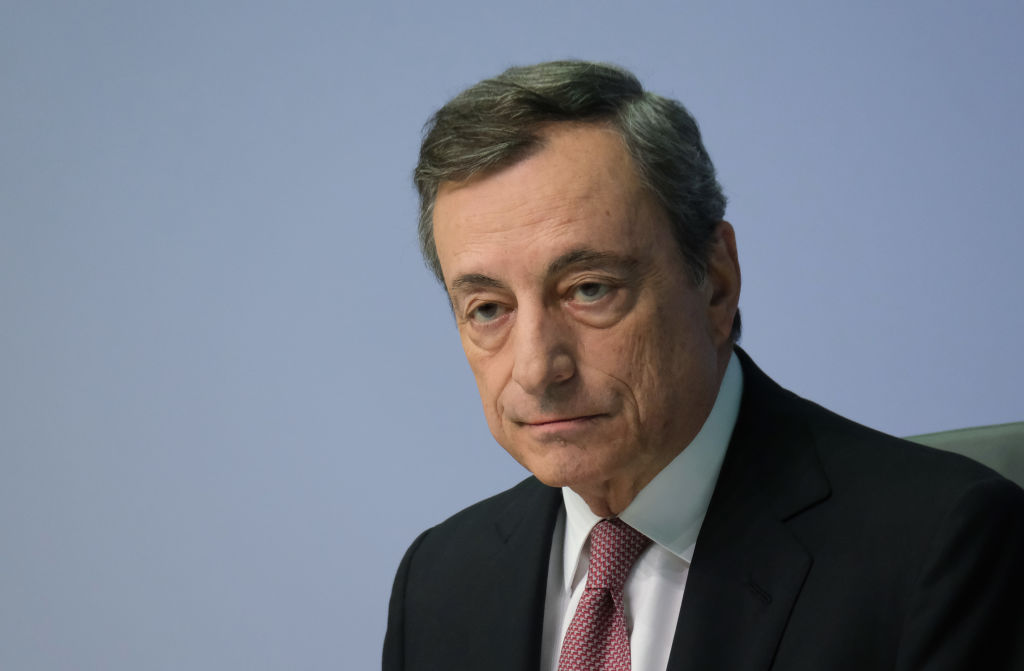
Mario Draghi speaks to the media following a meeting of the ECB governing board in Frankfurt am Main, 2019. (Sean Gallup / Getty Images)
Never elected to any public office, the new prime minister was keen to assure ordinary Italians he had their interests at heart. A former European Commission official, he insisted his aim was to rebuild trust between citizens and their institutions — and overcome the troubling social breakdown driven by soaring unemployment.
Ahead of his first confidence vote in the Senate, the new premier promised to raise Italy out of the crisis by cleaning up the public finances, fighting tax evasion, ensuring social cohesion, and returning the economy to sustainable growth. The media near-unanimously praised the technocrat for saving Italy from the mess left by a bankrupt political class: amidst such adulation, it was no surprise he began his premiership with 84 percent public approval ratings.
This all happened in fall 2011, when former Goldman Sachs advisor Mario Monti became Italian prime minister. His now-infamous government went on to introduce eye-watering austerity which pushed up unemployment and presided over a 3 percent fall in GDP. Such was this “providential” figure’s collapse, that when Monti ran in the general election fifteen months after his appointment, only one in ten voters backed his party.