The Rise of Italy’s Populist Right Is a Bleak Warning From the Recent Past
In early 1990s Italy, the retreat of the Left and mounting popular cynicism toward politics allowed a new radical right to begin building its hegemony. For all its idiosyncrasies, the Italy of those years looks increasingly like a mirror of our own future — a country where fascist talking points became normalized and even mild reformism was decreed illegitimate.
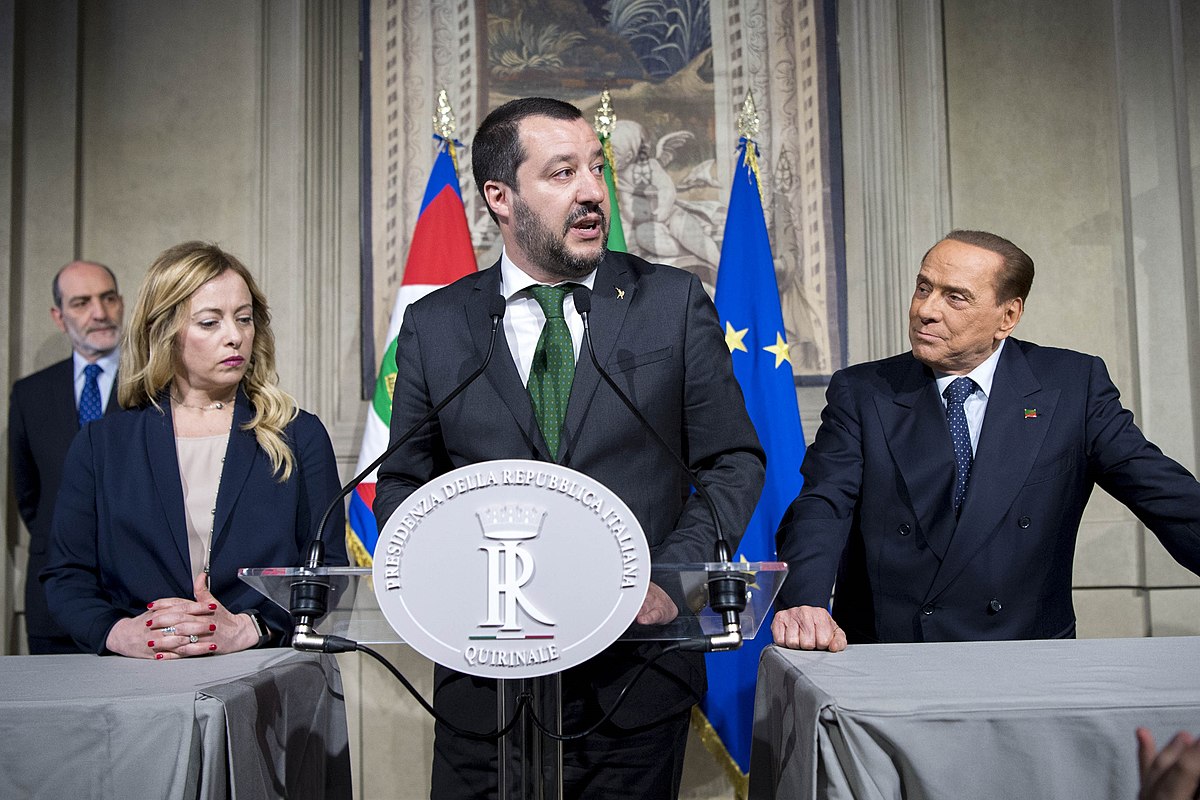
Giorgia Meloni, Matteo Salvini, and Silvio Berlusconi in 2018. Wikimedia Commons
Italy is often portrayed as an outlier, a country whose long-stagnant economy and chaotic public life need to catch up with the higher standards of “normal” European countries. But Jacobin Europe editor David Broder’s new book First They Took Rome: How the Populist Right Conquered Italy takes the opposite view — arguing, rather more pessimistically, that Italy’s recent history of economic decline, political volatility, and rising far-right hegemony show other Western countries a mirror of their own future.
Whatever the liberal clichés about Italy’s timeless decadence and reactionary common sense, this is a country that even in the late 1980s boasted the West’s largest and most dynamic left, at a time when its GDP per capita outpaced that of Britain. Today, Italy instead represents the hollowing out of democratic choice, with the shattering of the mass parties of the so-called “First Republic” (1946–92) and a striking lack of political response to three decades of flatlining growth and collapsing wages.
Long before Brexit and Trump, today’s political turmoil across the West was foreshadowed already in the Italy of the early 1990s. Broder explains how the “Bribesville” anti-corruption trials of the early 1990s (also known as “Clean Hands”) fed an “anti-political” revolt against the old mass parties. The result was not to clean up politics, but rather to feed a wider privatization of public life, giving free reign to the most reactionary forces and hobbling democratic alternatives.