The US Immigration System Treats Workers as Disposable
Countless sectors in the US, like the dairy industry, couldn’t run without undocumented workers. Yet those same workers are denied their basic rights and subjected to the constant threat of deportation — dehumanizing and terrorizing them while weakening the power of the broader working class.
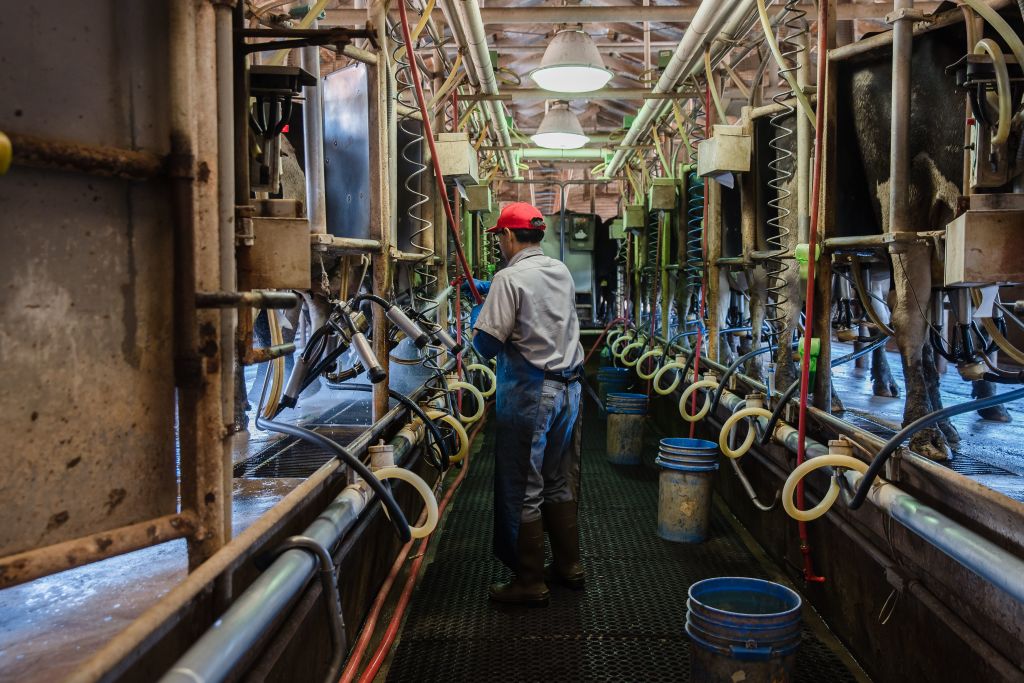
A worker milks Holstein cows on April 16, 2020, at a dairy farm in Escondido, California. (Ariana Drehsler / AFP via Getty Images)
In the course of researching her book, Milking in the Shadows: Migrants and Mobility in America’s Dairyland, sociologist Julie Keller interviewed Henry, the owner of a large dairy farm in Wisconsin that employed ten migrant workers from Mexico. Henry (Keller uses pseudonyms for the subjects of her book) explains that he worked out an arrangement with local law enforcement through his nephew, an officer: if his undocumented employees, who are not eligible for drivers’ licenses in Wisconsin, would keep their grocery runs to before midnight, they would not be pulled over.
It’s a startling admission of nepotistic corruption, but it also highlights how the US immigration system is set up to deny immigrant workers rights and provide employers with a more exploitable labor force. If Henry could protect his undocumented workers from the law, the inverse was also implicitly true: he could subject them to it, especially if they fell out of his favor.
As in many other sectors of the US economy, undocumented immigrants have become essential to the dairy industry. Wisconsin, where Keller focused her research from 2011 to 2012, is second only to California in dairy production, with more than nine thousand farms — one-fifth of whose workers are thought to be undocumented. Yet they’re denied workplace protections, see their organizing rights trampled upon, and face the constant threat of deportation. The result: a dehumanizing system that terrorizes the undocumented while also undercutting the power of the broader working class.