Why Cable News Hates Medicare for All
From last year’s Democratic primaries to this year’s Biden agenda, TV news coverage of the health care debate is outrageously skewed against single-payer reform. To understand why, we need look no further than their business model.
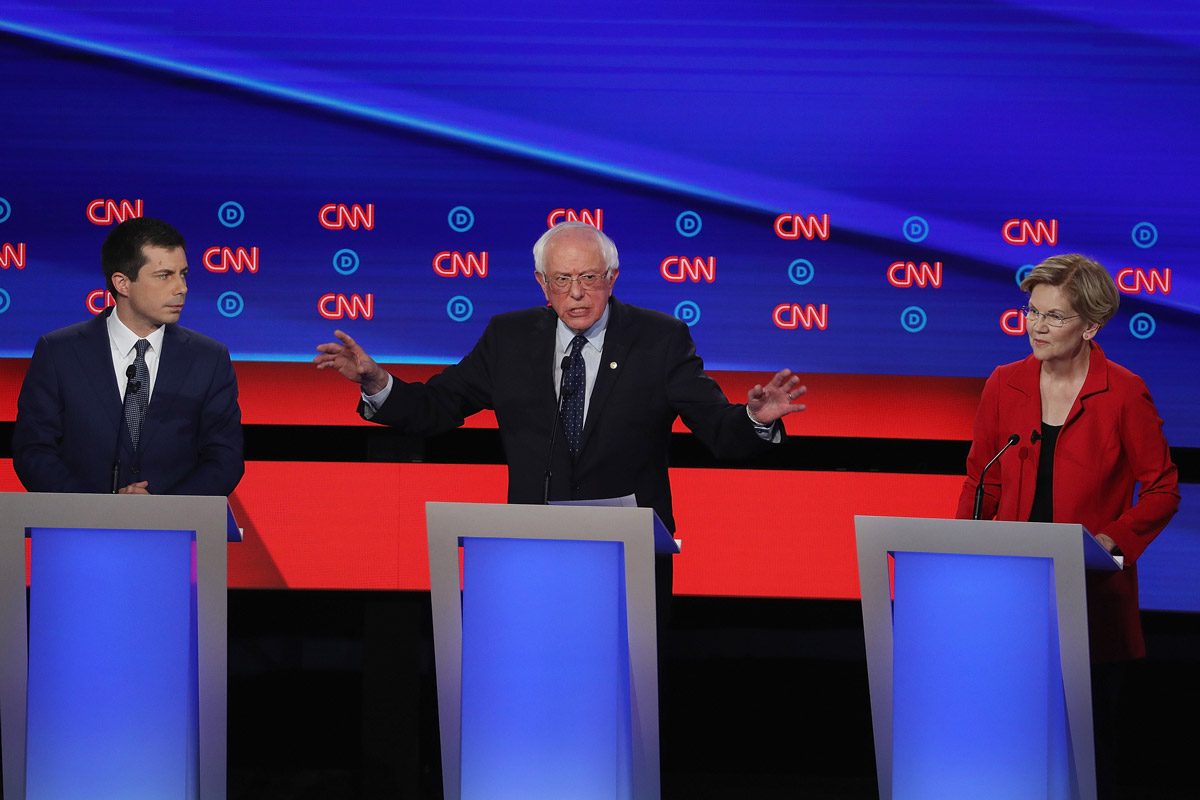
Bernie Sanders speaks while Elizabeth Warren and Pete Buttigieg listen during the Democratic presidential debate at the Fox Theatre on July 30, 2019 in Detroit, Michigan. (Justin Sullivan / Getty Images)
If you watched any number of last year’s Democratic primary debates, there’s a good chance you noticed one of their most overt and recurring patterns: namely, a near total hostility toward the idea of a universal, single-payer health care system.
At times, this hostility could be almost baroque, with one voice or another invariably shouting it from the TV screen any time the subject of health care was broached. This extended not only to most of the candidates themselves (Bernie Sanders being the sole contender to unequivocally champion Medicare for All) but also to the panelists and commentators featured on the cable networks that hosted the debates. As Sanders himself pointed out during a Detroit event hosted by CNN, even the ad breaks generally offered no solace to those hoping for even a momentary cessation of the barrage: health insurance and pharmaceutical companies seizing every opportunity to bombard viewers with misleading industry agitprop about the breathtaking wonders of profit-driven health care.
On its face, the existence of this advertising effort likely surprised no one. Wherever their politics happen to sit, and whether they sympathize or not, most Americans probably grasp the idea of an industry using ad space to protect its business model. Even the hostility toward Medicare for All then expressed (and still expressed) by many Democratic politicians has a fairly straightforward explanation: a whopping majority of voters, after all, favor campaign finance reform and believe donations from corporations and special interests have a direct influence on the decisions those running for office make. It requires no great leap of the imagination to understand that politicians raising funds from figures in the very industry threatened by a particular policy aren’t going to be its most vocal champions.