John le Carré Told the Truth About Cold War Espionage When Few Others Would
John le Carré died Saturday at age eighty-nine. His novels rejected the glamor and ritz of Cold War–era spy fiction. Instead, he portrayed espionage as a dreary, disturbing machine that ground up innocents for a goal that didn’t justify the human cost.
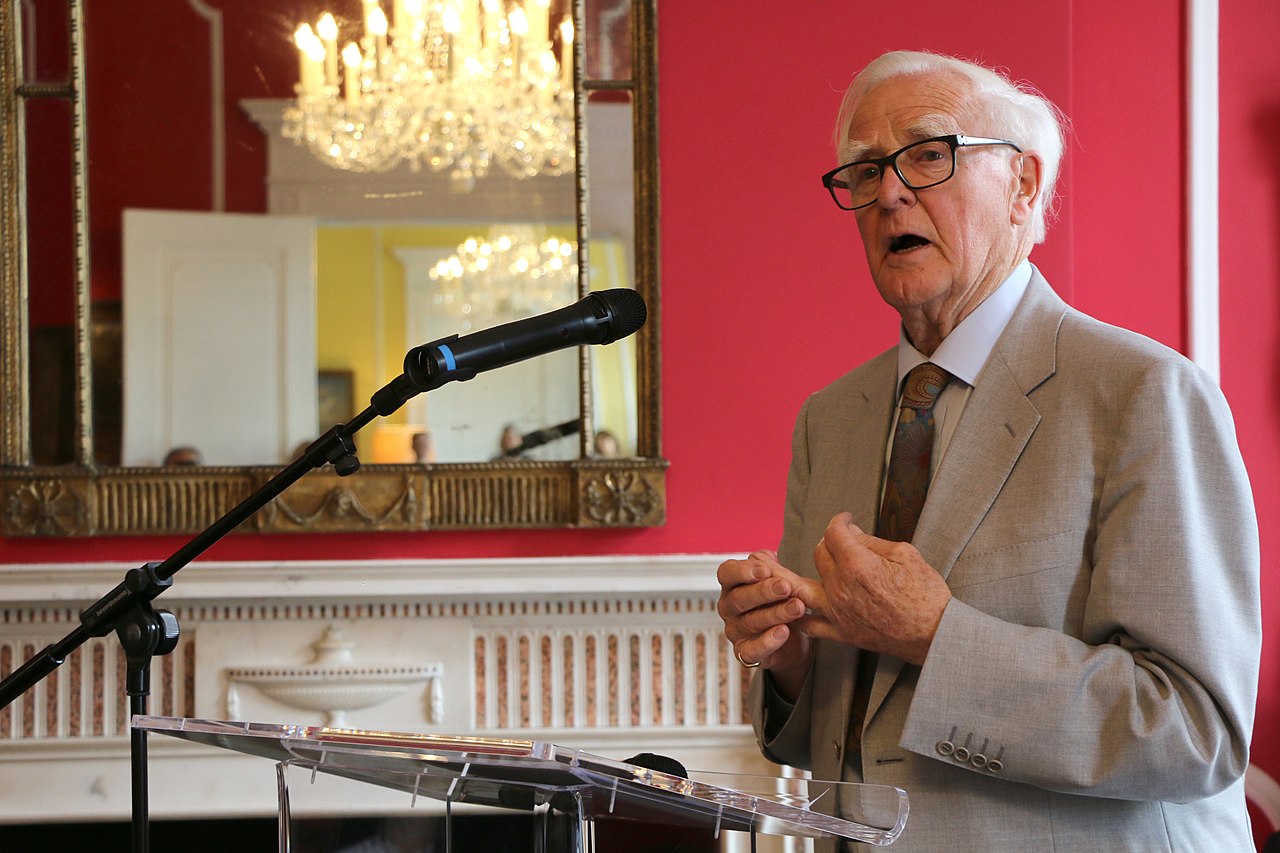
John le Carré giving a keynote speech at the Germany embassy in London in June 2017. (Germany Embassy London / Wikimedia Commons)
I first read John le Carré, who died Saturday at the age of eighty-nine, in graduate school for Russian studies. In my second year, I took an immense interest in espionage and intelligence history, culminating in taking a course on Cold War espionage, for which I evaluated his novel The Spy Who Came in From the Cold. It’s an incredibly intricate, tightly plotted book, and the paper was easy to write. Le Carré’s work affected me in a way that most of my readings on statecraft didn’t. He never indulged in the black-and-white reasoning of most foreign policy analysis, instead recognizing the humanity (and inhumanity) of all people involved — a recognition that cast a cynical eye on the brutality of American and British Cold War methods at a time when few Western authors would.
I fell in love instantly and have read most of his other works — though it’s an ongoing journey, since I kept pacing myself, spacing the books out to prevent myself from finishing his oeuvre too quickly. I loved entering the secretive world of spycraft that Le Carré created in his literature and didn’t want to exit it any sooner than was absolutely necessary.
The Spy Who Came in From the Cold may be his finest work, but other famous Le Carré greats include Tinker, Tailor, Soldier, Spy and The Tailor of Panama. All of his work explored themes of fidelity, pragmatism, and what service to — and disillusionment from — an ideal means.