Bolivia’s Indigenous Masses Have Changed the Course of History
Fifteen years after Evo Morales was first elected president of Bolivia, his socialist party has returned to power. The far right hasn’t given up — but the indigenous masses that reversed the right-wing coup and forced elections have proven themselves a formidable force for justice and democracy.
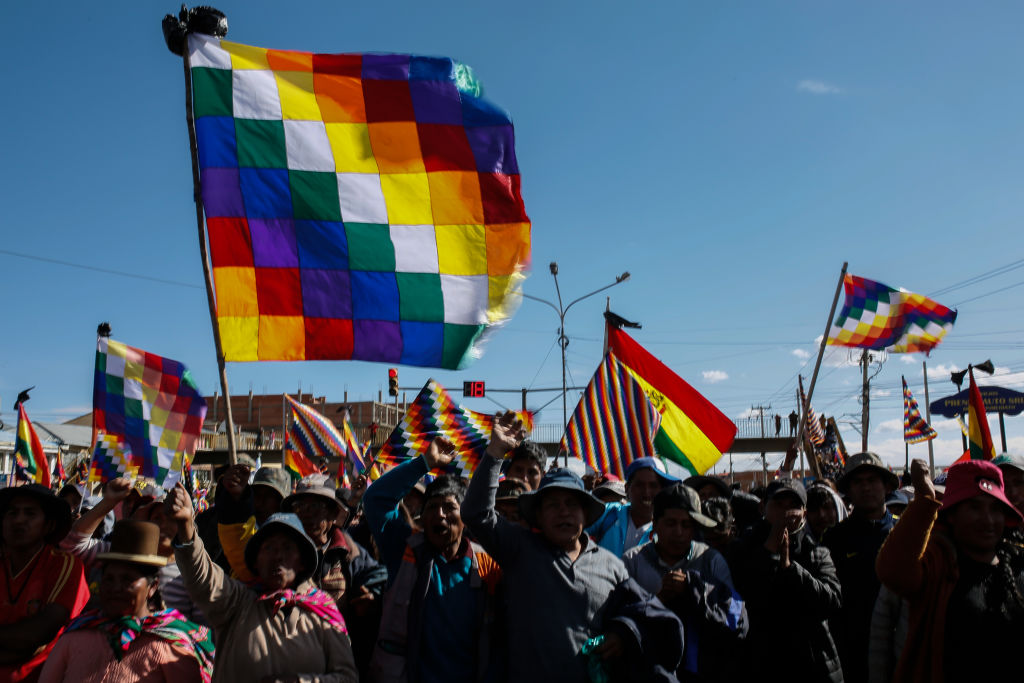
Supporters of former president Evo Morales block a road to a Yacimientos Petroliferos Fiscales Bolivianos (YPFB) oil refinery as part of a protest against Jeanine Áñez on November 17, 2019 in El Alto, La Paz, Bolivia. (Gaston Brito Miserocchi / Getty Images)
Two realities collide today in Bolivia. One is the power of a murderous, kleptocratic elite that overthrew an elected government last November, employing violence to impose its will and reprivatize the economy. The other is the people who just voted massively for the return of Movement toward Socialism (MAS), the electoral arm of a socialist movement rooted in indigenous politics that long predates the party itself.
Common sense would indicate that a right-wing coup government never voluntarily cedes authority to a government striving toward socialism. Indigenous peoples, working-class, and even middle-class Bolivians saw no reason to accept that notion.
And on November 16, Evo Morales Ayma — the historic indigenous leader of MAS, who served as president for almost fourteen years — insisted publicly that the coup regime is not ready to retire. The oligarchy appears to have accepted the MAS victory, he said in an interview, but they do not intend to hand power over to the people.