What Should Bolivia Do Now With Its Coup Plotters?
The victory of Evo Morales’s Movimiento al Socialismo party in Bolivia is a triumph for democracy and a rebuke to the right-wing coup plotters. But Bolivia now faces some serious questions: How will the country engage with these recent atrocities perpetrated by the Right? And what will happen to those who committed them?
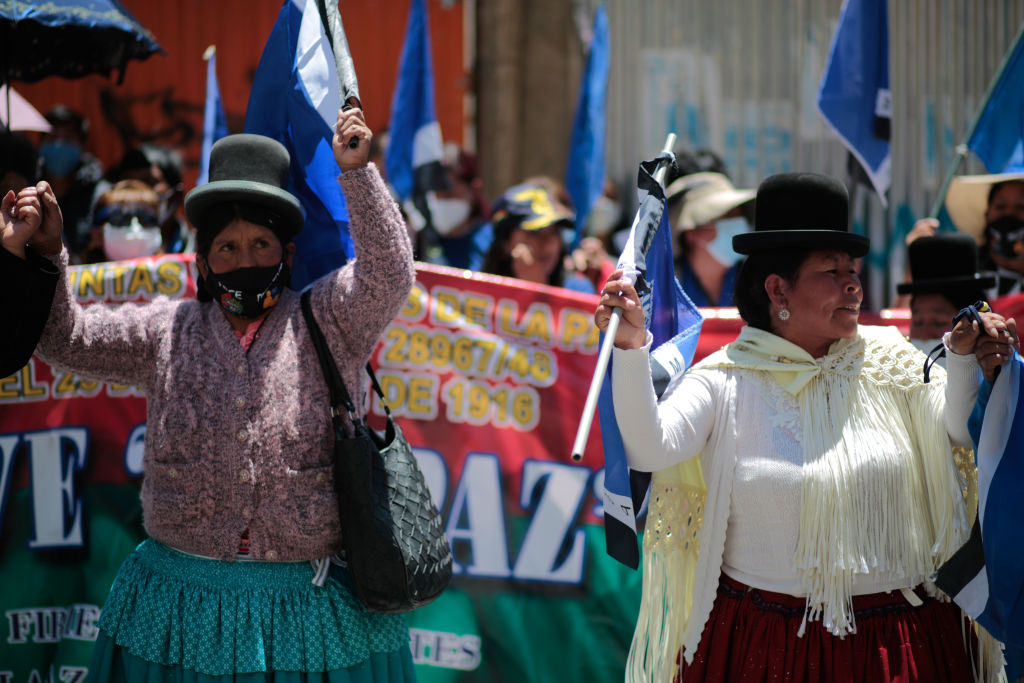
Supporters of MAS (Movement Toward Socialism) candidate Luis Arce wave flags during a celebration the day after general elections on October 19, 2020 in La Paz, Bolivia. (Gaston Brito Miserocchi / Getty Images)
The recent victory for the Movimiento al Socialismo (MAS) party in Bolivia’s election is a triumph of indigenous, socialist organizing in the wake of a brutal coup by the right wing and the military. With a victory margin so wide that even the leaders of the coup government couldn’t contest it, the party of ousted president Evo Morales will return to leadership under his successor, Luis Arce. Socialists, democratic activists, and politicians around the world have weighed in to celebrate their victory.
But of course, not all of these celebrations are created equal. Many liberal commentators in the United States, for example, have hailed MAS’s victory as a “happy ending,” while some leftist outlets have lauded the result as a triumph against fascism and an unassailable win against the Right and imperialism. The problem is that both of these perspectives frame the election as the conclusion of a story, the road to democracy — something that Bolivians themselves remind us is not the case.
This victory is only the beginning of another struggle: that of returning to democratic rule after a coup, a long and complex process under the best of conditions. Such struggles are unfortunately not new for Bolivians, Latin Americans, or indeed the citizens of many countries throughout the world. Coups and their aftermaths are difficult to overcome.