Learning to Strike and Win
If we’re going to reverse the ravages of neoliberalism, we’ll need to rebuild a global labor movement that knows how to strike and win. A recent international “Strike School,” led by labor organizer Jane McAlevey, brought 3,000 trade unionists and activists from seventy countries to try to do just that.
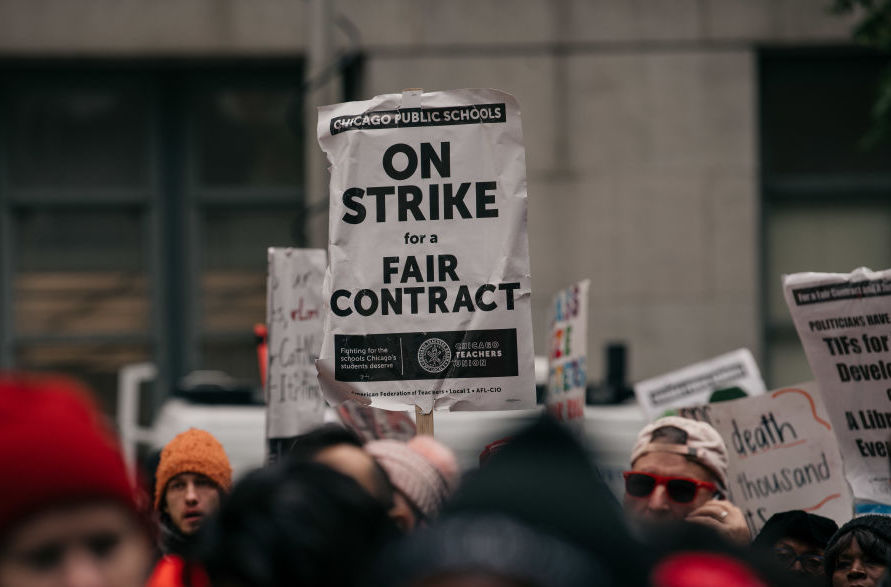
Thousands of demonstrators took to the streets of downtown Chicago to support the teachers strike in 2019. (Scott Heins / Getty Images)
Organizing trainings are not normally news-worthy events. But “Strike School,” which wrapped up its final session on October 13, is an exception. Led by labor organizer Jane McAlevey and hosted by the Rosa Luxemburg Stiftung (RLS), this six-session training brought together roughly three thousand individuals and groups from seventy countries seeking to grapple with the methods necessary to take on, and defeat, the powers-that-be.
The course took place at a particularly bleak moment in world politics, with the COVID-19 pandemic combining with a dramatic spike in unemployment to put working people even further on the defensive. Faced with austerity, climate disaster, immigrant scapegoating, and the reelection threat of Donald Trump and other reactionaries, the absence of a powerful, fighting labor movement continues to be the crucial missing link for progressive change across the globe.
Glimpses of the untapped potential for unions to turn around this state of affairs are not hard to find. The opening plenary of Strike School was launched by Association of Flight Attendants president Sara Nelson, who in early 2019 helped stop Donald Trump’s government shutdown by raising the specter of a general strike.