Ontario’s Days of Action Offer a Lesson for Canadian Workers Today
In 1990s Ontario, austerity measures provoked a long series of strikes and demonstrations known as the Days of Action. The high points of that mobilization can serve as a model for struggles to come as we face post-pandemic cutbacks.
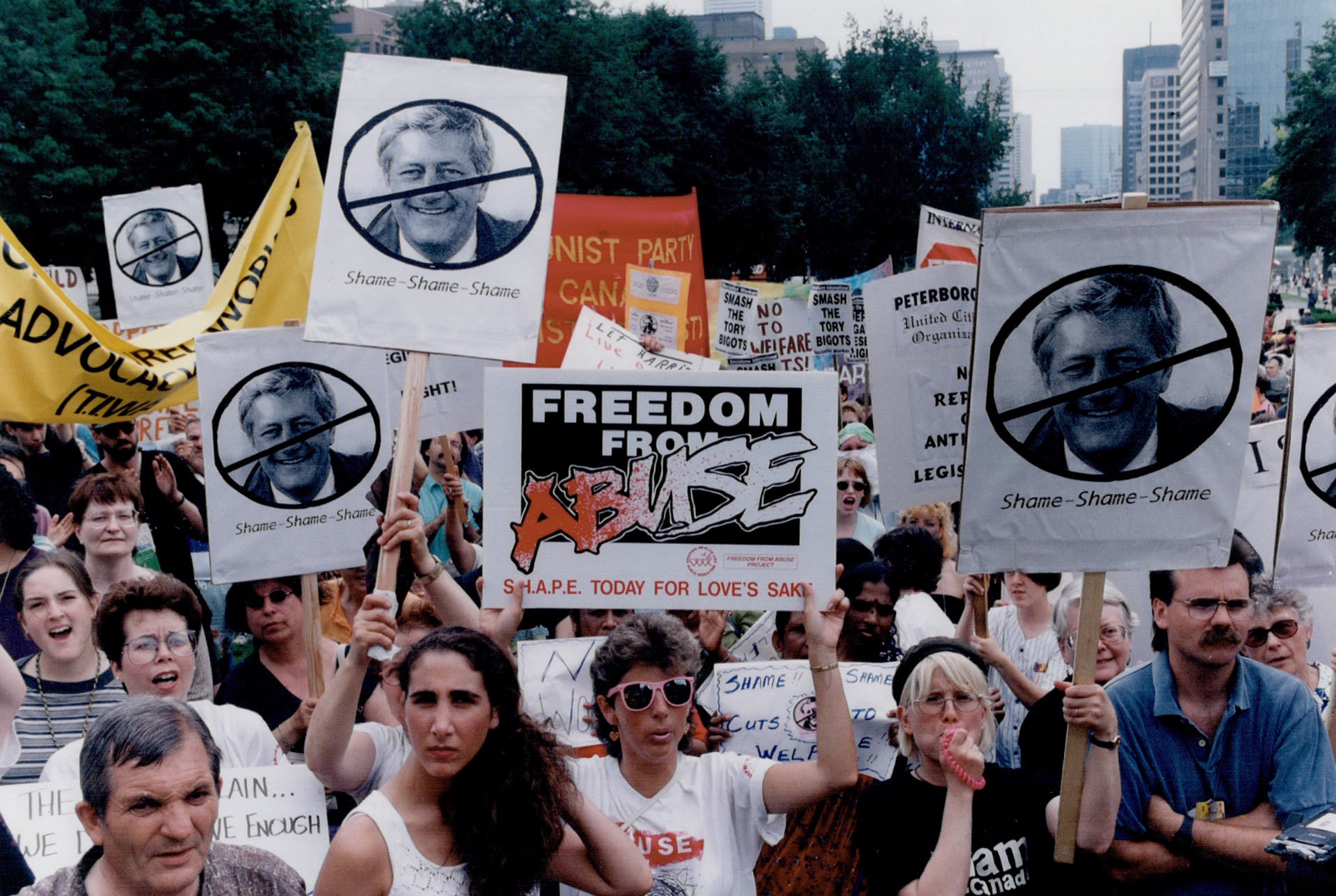
Protests in Ontario against cuts to social assistance, 1995. (Boris Spremo / Toronto Star)
“High taxes and spending are killing Ontario jobs,” claims the narrator of a 1995 Progressive Conservative Party of Ontario (PC) election ad. Then-leader Mike Harris enters the frame: “Had enough? I have.”
Harris and the Conservatives swept the 1995 Ontario election with a massive majority, turfing out the incumbent social-democratic New Democratic Party (NDP). The NDP, whose seat count in parliament shrunk from seventy-four to seventeen, was in a state of disarray.
The party’s record in government had been poor, having taken office after promising a broad social-democratic program called the “Agenda for People.” Popular promises like public auto insurance and disrupting the US-Canada free trade deal were made by a party that never expected to win the 1990 provincial election.