The Mexican Revolution Is Not Dead
The Mexican Revolution erupted 110 years ago today, as ordinary Mexicans rebelled against despotism and inequality. Before it was over, the country’s agrarian oligarchy had been destroyed.
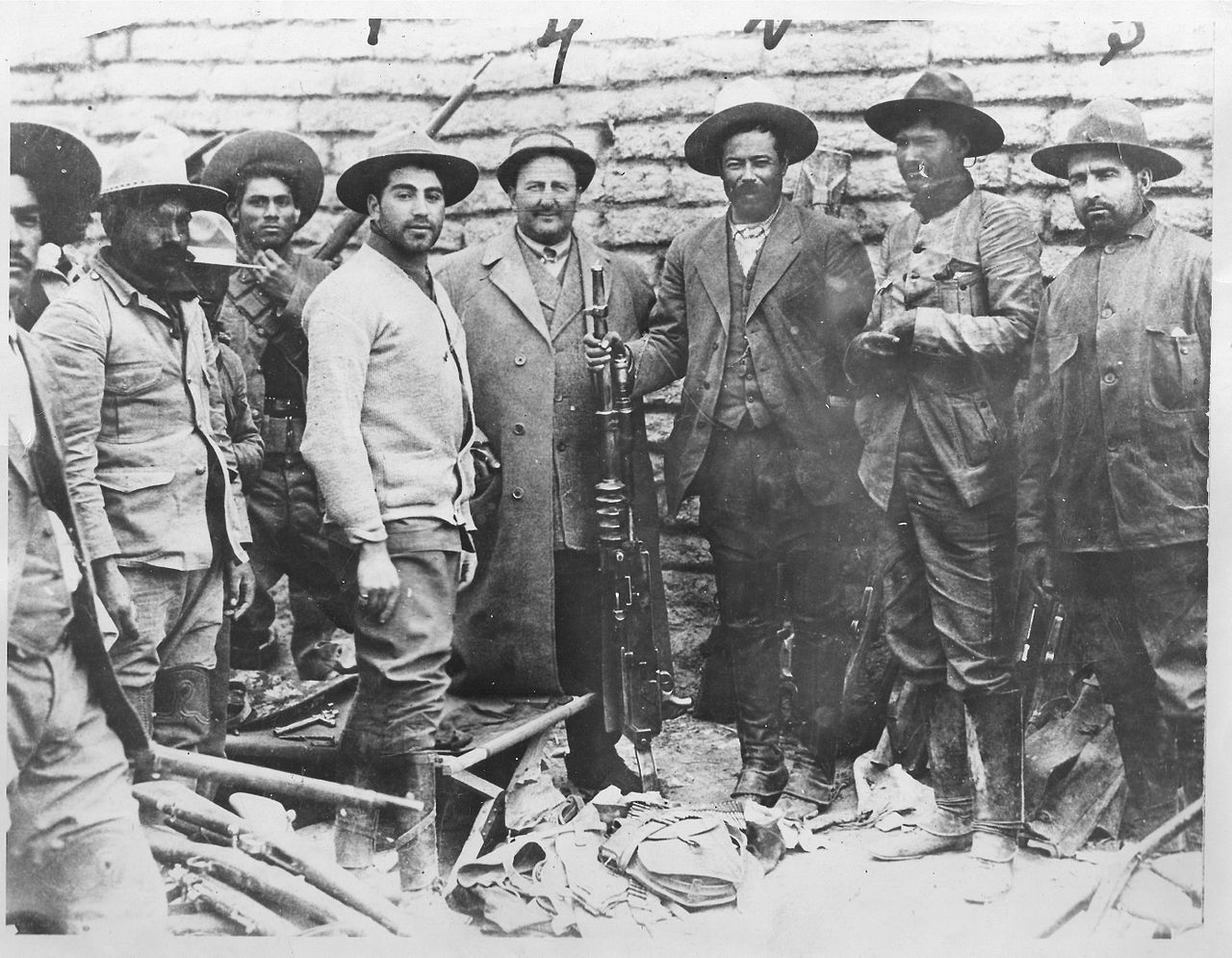
A photo from the Mexican Revolution, circa 1915, featuring Pancho Villa (third from right). (Wikimedia Commons)
The Mexican Revolution began 110 years ago, in response to a formal invitation. It then slowly unfurled into an uncontrollable mess. Its leader, the gentlemanly Francisco Madero, issued the summons in his Plan de San Luis: “On November 20, from 6 p.m. on, all citizens of the Republic shall take up arms to overthrow the authorities that currently govern us.”
“Mr and Mrs Madero kindly request your distinguished presence for the initiation of the Mexican Revolution; please RSVP at your local Anti-Reelection Committee,” it may well have read.
Except that rather than summoning a much-hoped-for, oh-so-civil civil society, Madero’s call was answered by a cast of characters that has contributed to making Hollywood a more diverse kind of place: bandit heroes like Pancho Villa; a villanous coup-plotting gringo ambassador; and Francisco Madero himself, who received his marching orders at séances, from the spirit of his long-departed little brother, Raúl. And then there was also the arch-traitor, alcoholic and second Indian president of Mexico, General Victoriano Huerta, who had his boss, the mild-mannered Madero, killed; and the ancient patriarch general Porfirio Díaz, who had the folly of seeking reelection for the eigth time (when is enough enough?). The list still goes on and on . . . peasant leaders like Emiliano Zapata; wily schemers like Venustiano Carranza . . . All locked in a fight to survive, or to kill one another off — for, like Chronos, the Mexican Revolution devoured all of its children.