Helen Keller: The Hands That Produce Should Be the Hands That Benefit
To many, Helen Keller is a symbol of unyielding perseverance in the face of adversity. Rightfully so. But she was also one of the most prominent American Marxists of her time. Here, we reprint her 1912 essay "The Hand of the World" in full.
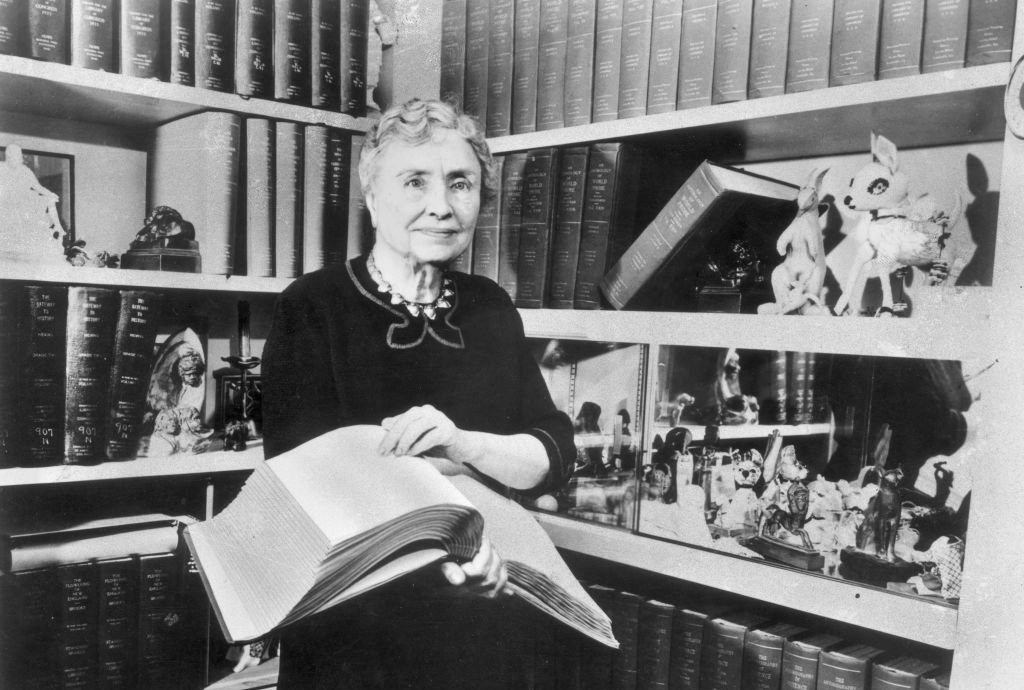
Portrait of American writer, educator and advocate for the disabled Helen Keller, 1956. (Hulton Archive / Getty Images)
The symbol, sign, and instrument
Of each soul’s purpose, passion, strife,
Of fires in which are poured and spent
Their all of love, their all of life. O feeble, mighty human hand!
O fragile, dauntless human heart!
The universe holds nothing planned
With such sublime, transcendent art!— Helen Fiske Jackson
As I write this, I am sitting in a pleasant house, in a sunny, wide-windowed study filled with plants and flowers. Here I sit, warmly clad, secure against want, sure that what my welfare requires the world will give. Through these generous surroundings I feel the touch of a hand, invisible but potent, all-sustaining — the hand that wove my garments, the hand that stretched the roof over my head, the hand which printed the pages that I read.
What is that hand which shelters me? In vain the winds buffet my house and hurl the biting cold against my windows: that hand still keeps me warm. What is it that I may lean upon it at every step I take in the dark, and it fails me not? I give wondering praise to the beneficent hand that ministers to my joy and comfort, that toils for the daily bread of all. I would gratefully acknowledge my debt to its capability and kindness. I pray that some hearts may heed my words about the hand of the world, that they may believe in the coming of that commonwealth in which the gyves shall be struck from the wrist of Labour, and the pulse of Production shall be strong with joy.