What David Dinkins Taught Us
Whatever his failings, the late New York mayor David Dinkins's historic stature and contributions to the common good gave him a unique place in the democratic socialist movement.
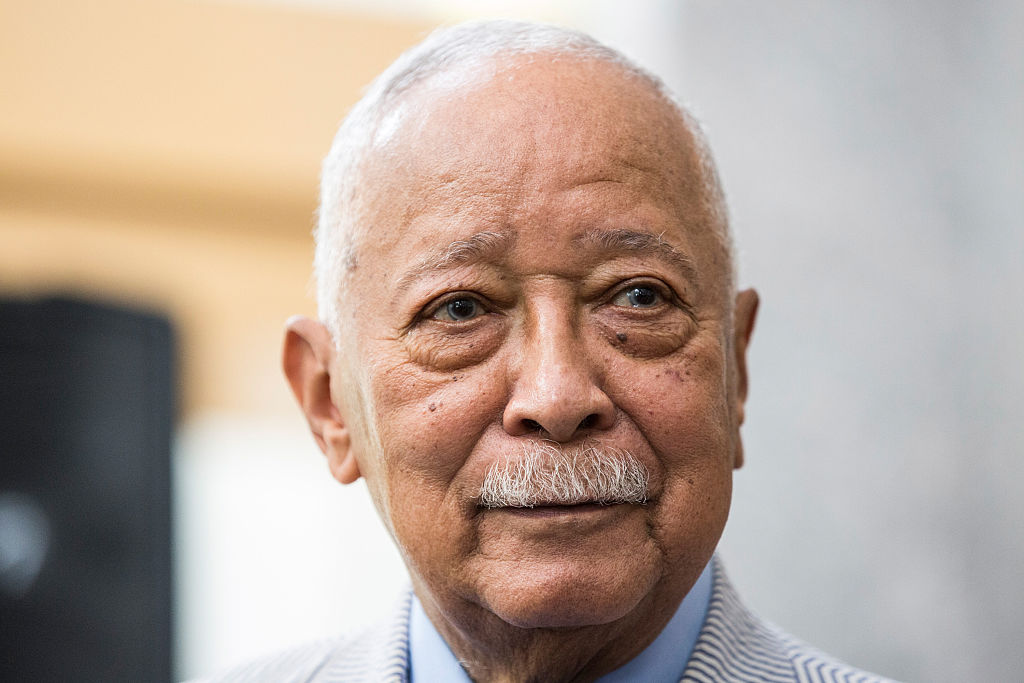
David Dinkins attends a dedication to the Maya Angelou Forever Stamp at the African Buriual Ground National Monument in New York City, 2015. (Andrew Burton / Getty Images)
Earlier this week I learned of the passing of my boyhood mayor, David Dinkins. While I was too young to remember his 1989 election, his leadership of New York City was one of my first childhood political memories. I knew my parents supported him as did many of our family and friends. He was a resolute figure, and a committed progressive, that governed during a time of continued fiscal crisis, concerns over crime, and growing racial tension.
Those three factors conspired to lead to his defeat in 1993, after just three years in office, to Rudolph Giuliani, the city’s first Republican mayor in decades.
Giuliani rode racist rhetoric and culture war issues to Gracie Mansion against the city’s first black mayor. He took credit for the already declining crime rate, and leveraged a divided city to institute draconian rule and empowered abusive police practices whose racialized outcomes New York City is still dealing with today. The uprising this year against racist police brutality has forced the city to deal with this legacy, especially the harm against black and brown communities, and much more.