Towards a Democratic Socialism
- Patrick Camiller
One of socialists’ primary aims must be to transform the state — wedding representative democracy to new types of popular power while battling to democratize the authoritarian aspects of the state.
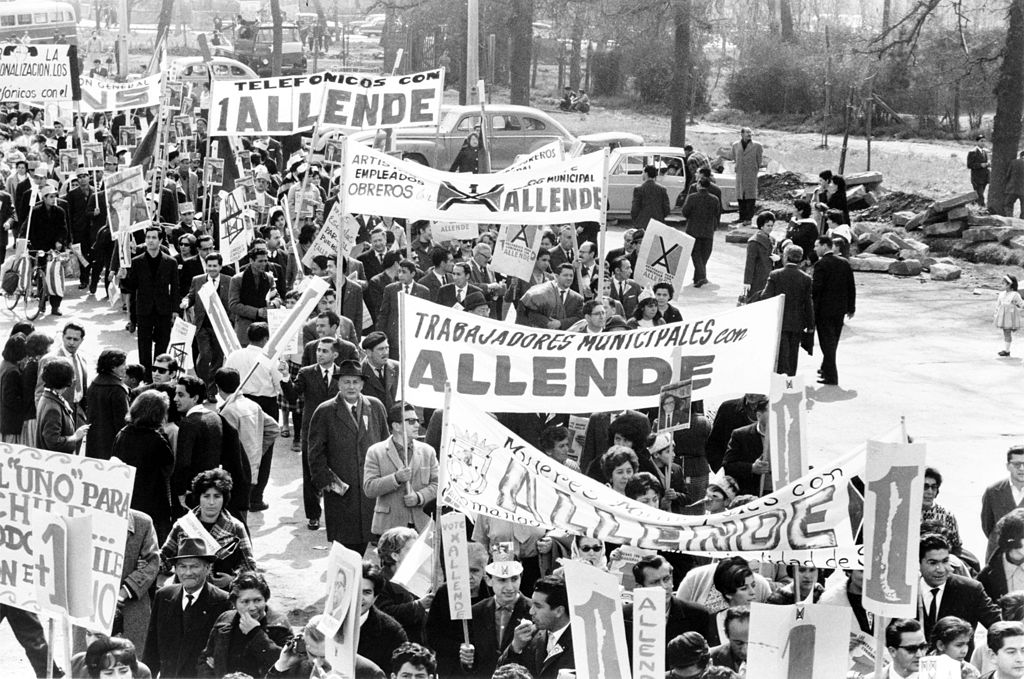
Supporters of Chilean socialist Salvador Allende in 1964. (Wikimedia Commons)
The question of socialism and democracy, of the democratic road to socialism, is today posed with reference to two historical experiences, which in a way serve as examples of the twin limits or dangers to be avoided: the traditional social-democratic experience, as illustrated in a number of West European countries, and the Eastern example of what is called “real socialism.” Despite everything that distinguishes these cases, despite everything that opposes social democracy and Stalinism to each other as theoretico-political currents, they nevertheless exhibit a fundamental complicity: both are marked by statism and profound distrust of mass initiatives, in short by suspicion of democratic demands.
In France, many now like to speak of two traditions of the working-class and popular movements: the statist and Jacobin one, running from Lenin and the October Revolution to the Third International and the Communist movement; and a second one characterized by notions of self-management and direct, rank-and-file democracy. It is then argued that the achievement of democratic socialism requires a break with the former and integration with the latter.
In fact, however, this is a rather perfunctory way of posing the question. Although there are indeed two traditions, they do not coincide with the currents just mentioned. Moreover, it would be a fundamental error to imagine that mere integration with the current of self-management and direct democracy is sufficient to avoid statism.