Italians Need Measures to Stop COVID-19, But They Need Income Support, Too
Faced with soaring case numbers, the Italian government has imposed tougher restrictions on businesses and social gatherings. Yet as millions face a miserable dilemma between personal safety and financial ruin, protesters have begun to defy the curfew — a sign of the fraying social consensus behind shutdown measures.
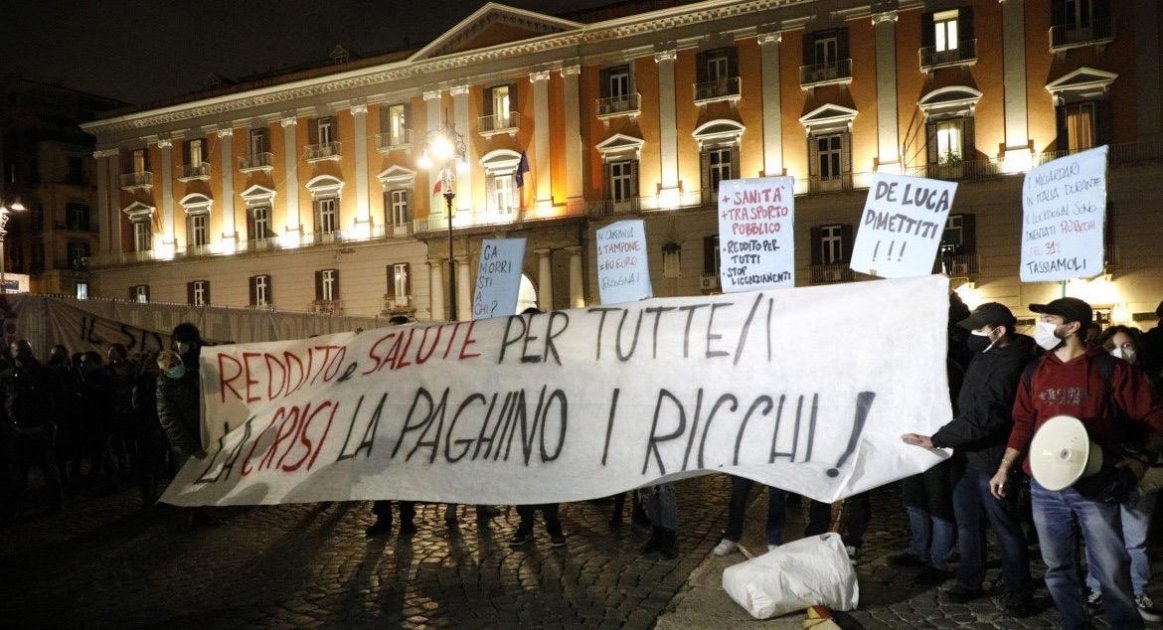
Lockdown protests on Friday, October 23, in Naples, Italy. (Potere al Popolo)
“Fascists and mafia behind anti‑lockdown riots in Naples,” boomed London’s Times. Or, as Vice put it, “Italy’s Anti-Lockdown Protests Turn Violent as Far-Right Take to the Streets.” There definitely have been some far-right militants involved in anti-lockdown protests, which began in Naples on Friday October 23 — especially as they spread the length and breadth of Italy. But with Italians again subject to nighttime curfews and bans on social gatherings, is it really true that Mussolini nostalgics and mafiosi are driving events?
Some good sense came from Roberto Saviano, interviewed for liberal Italian site Open: in Naples, at least, such forces were “scum trying to latch onto the desperate situation.” The region’s governor, Vincenzo de Luca — now famous abroad for his ranting videos ordering Neapolitans to stay at home — is keen to give the impression of a hardman imposing discipline on a recalcitrant population. But “order” without security is no such thing, for the millions left in the lurch by the lack of measures to deal with the social crisis.