Japan’s New Leader, Suga Yoshihide, Will Maintain the Old Regime
Suga Yoshihide, longtime aide to Abe Shinzo, has now replaced him as Japan’s prime minister. Suga will preserve the main features of Abe’s long stint in power: creeping militarism, subordination to the US, and a high-handed approach to political opposition.
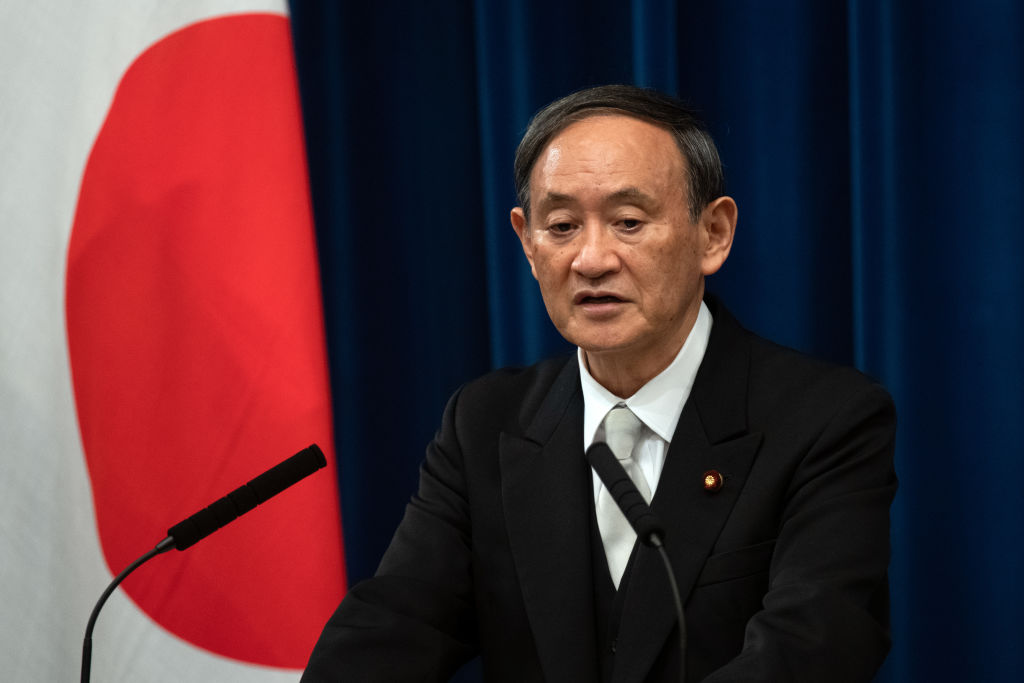
Suga Yoshihide during a press conference following his confirmation as prime minister of Japan on September 16, 2020 in Tokyo, Japan. (Carl Court / Getty Images)
On September 14, Suga Yoshihide replaced Abe Shinzo as Japan’s prime minister after nearly eight years as Abe’s chief cabinet secretary — during which time he had, in effect, jointly run the government.
Suga has promised to continue the policies of his predecessor. The scandals, cover-ups, and probable criminal behavior in which the old administration found itself ensnared are also likely to bedevil the new Japanese premier. To understand the “new” regime, we thus need to look closely at the “old.”
A Family Affair
If anyone in modern Japan could be said to have a political pedigree, it would have to be Abe Shinzo (prime minister 2006–7 and 2012–2020). His father Abe Shintaro held various state posts, including that of foreign minister between 1977 and 1986; his great-uncle Satō Eisaku was prime minister between 1964 and 1972; his grandfather, Kishi Nobusuke, was prime minister from 1957 to 1960; and his younger brother, Kishi Nobuo, has now become defense minister in the Suga cabinet of 2020.