Respiratory Therapists Are Some of the Unsung Heroes of the Pandemic
Respiratory therapists operate ventilators and perform crucial services in treating the coronavirus. They say they still don’t have the protective equipment they need.
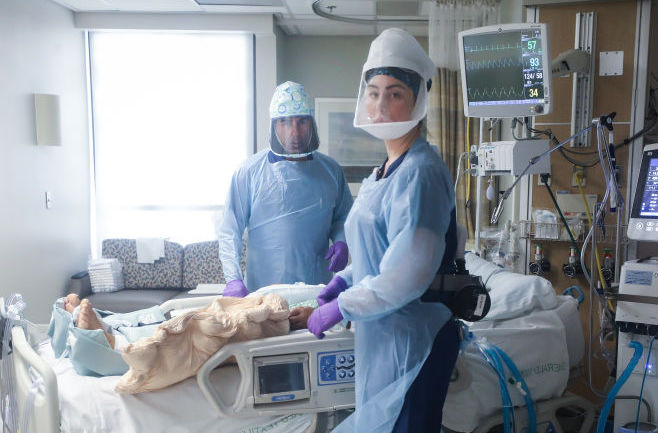
A nurse and respiratory therapist care for a COVID-19 patient in the Intensive Care Unit (ICU) at Sharp Memorial Hospital in San Diego, California. (Mario Tama / Getty Images)
When Jake, a respiratory therapist (RT), answers the phone, he is coughing. He explains that he caught COVID-19 from patients in his hospital. While he has mostly recovered, the cough is lingering.
“I spent five days in a hospital. I was sick for three weeks, and I’m still on a leave of absence because my lungs aren’t great,” says Jake. (All interviewees in this piece appear under pseudonyms, to enable them to speak openly about working conditions in hospitals.) “And now, with the wildfires, they’re really not great.”
Trained in cardiopulmonary medicine, RTs tend to any patient with breathing issues or lung problems. They say they are lower on the hospital hierarchy than doctors and nurses, pointing to lower pay and inadequate personal protective equipment (PPE) as evidence of this hierarchy. According to the Bureau of Labor Statistics, in 2019, median wage for RTs was $61,330; for nurses, it was $73,300. Respiratory therapists held about 135,800 jobs in 2019, 82 percent of which are in hospitals (whereas registered nurses held about 3.1 million jobs, with 60 percent employed in hospitals). While some RTs are unionized, many are not — leaving them without worker-led bodies to bargain over issues like pay and PPE, much less safety protocols and staffing ratios, or to raise public awareness about their working conditions.