Pauli Murray Was a Civil Rights Trailblazer
Organizer, lawyer, professor, priest — Pauli Murray held many titles throughout her life. But as a black lesbian with a burning hatred of oppression, her goal was always the same: to challenge discrimination and topple the brutal hierarchies of US society.
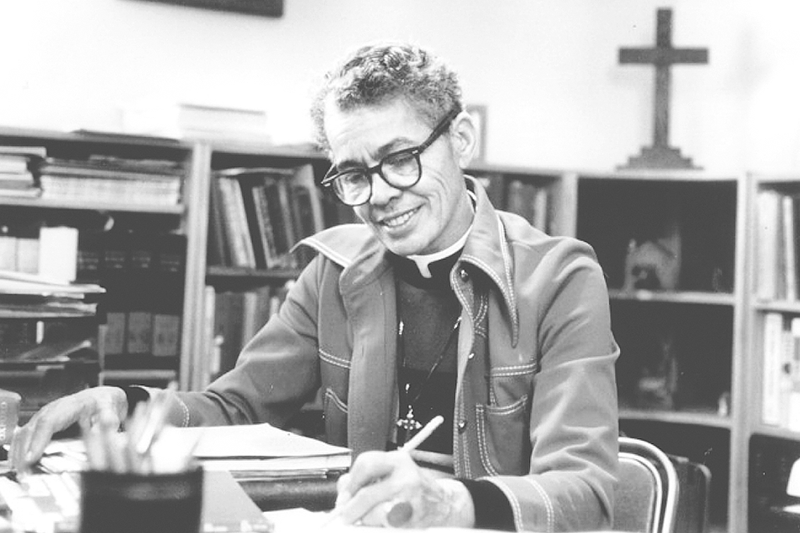
Pauli Murray. (Carolina Digital Library and Archives / Wikimedia Commons)
On April 17, 1943, three African-American students from Howard University, a historically black college, entered the Little Palace Cafeteria in Washington, DC. Despite being denied service, the students remained, reading from their schoolbooks. Three more Howard students then entered the restaurant, were denied service, refused to leave, and began reading as well. Three more students, then three more students — bringing the total to twelve — repeated the process, while seven additional students formed a picket outside the restaurant with signs like “We Die Together — Why Can’t We Eat Together?” Nearly two decades before the sit-ins of the 1960s, in the throes of World War II, the students were launching a full-frontal attack on Jim Crow.
As a planner and participant in the protest, Pauli Murray brought to bear her experience organizing with left-wing groups like the Socialist Party–affiliated Workers Defense League, sharing her insights with students (one of whom would go on to become a leading organizer with the Congress of Racial Equality, which helped organize the 1963 March on Washington). For Murray — a black lesbian woman — it was an early attempt in a lifetime of efforts to challenge discrimination and topple the brutal hierarchies of US society.
Born in 1910 and raised in the Jim Crow South, Murray accomplished an impressive series of “firsts” before her death in 1985. She became the first black deputy attorney general in California in 1946, the first African American to receive a law doctorate from Yale Law School in 1965, the first professor to teach African-American and women’s studies courses at Brandeis University in 1968, and the first African-American woman to be ordained as an Episcopal priest in 1977.