Why Won’t the US’s Largest Labor Federation Talk About a General Strike?
The barriers to organizing a general strike in the United States in response to the myriad miseries American workers are facing are massive. But we can’t move toward such a strike without at least putting the possibility on the table and discussing it — something the AFL-CIO has shown no interest in doing.
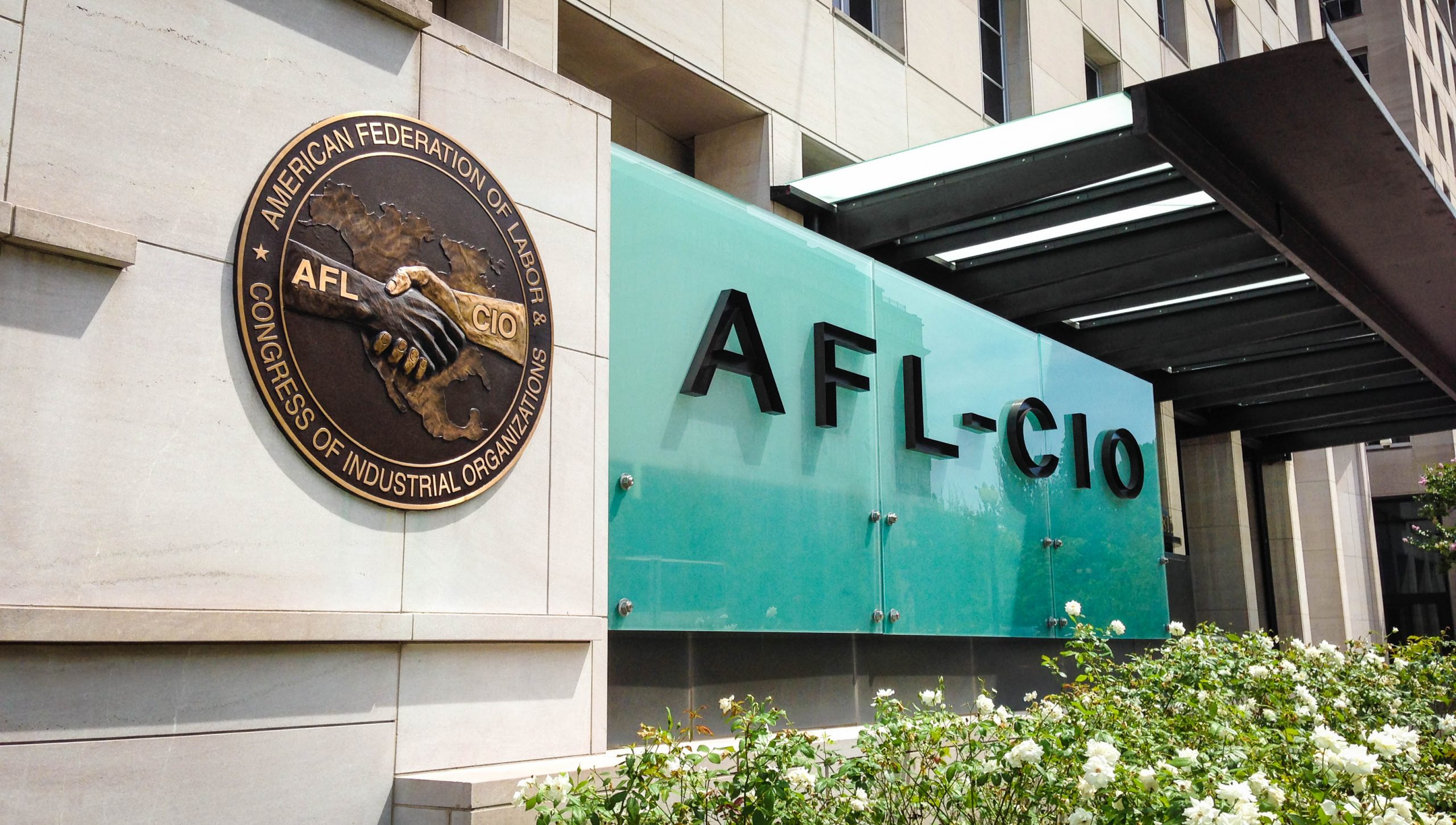
AFL-CIO Headquarters, Washington, DC. (Matt Popovich / Flickr)
Every so often over the past few years, the hashtag #GeneralStrike goes viral, with everyone from obscure Twitter users to celebrities like Cher and Britney Spears calling for a nationwide work stoppage to demand systemic change. It’s much easier to get a hashtag to take off than to actually pull off a general strike, of course. But since the pandemic began, calls for a general strike have become louder and more frequent, with even the New York Times getting on board.
US union density is at its lowest point in a century, and workers’ power is incredibly low. Still, the number of US workers going on strike is at a thirty-year high. Workers like teachers have pulled off successful work stoppages in the last few years, and the pandemic has shown that strikes or strike threats can be essential tools for defending workers’ health and safety. Such successes have no doubt helped grow the popularity of the idea that the most powerful and effective way workers can fight back against the domination of capital and the willful indifference of neoliberal institutions is by collectively withholding our labor.
It seems like everyone is talking about a general strike these days. Everyone, that is, except the one organization best positioned to not just raise the issue of a general strike, but to go beyond mere talk to actually organize one: the AFL-CIO.