We Need a Radically Different Approach to the Pandemic and Our Economy as a Whole
We talk to two public health experts about America's COVID-19 response and how poor households have borne a disproportionate share of the pandemic's hardship. We need to urgently fight for a more just society.
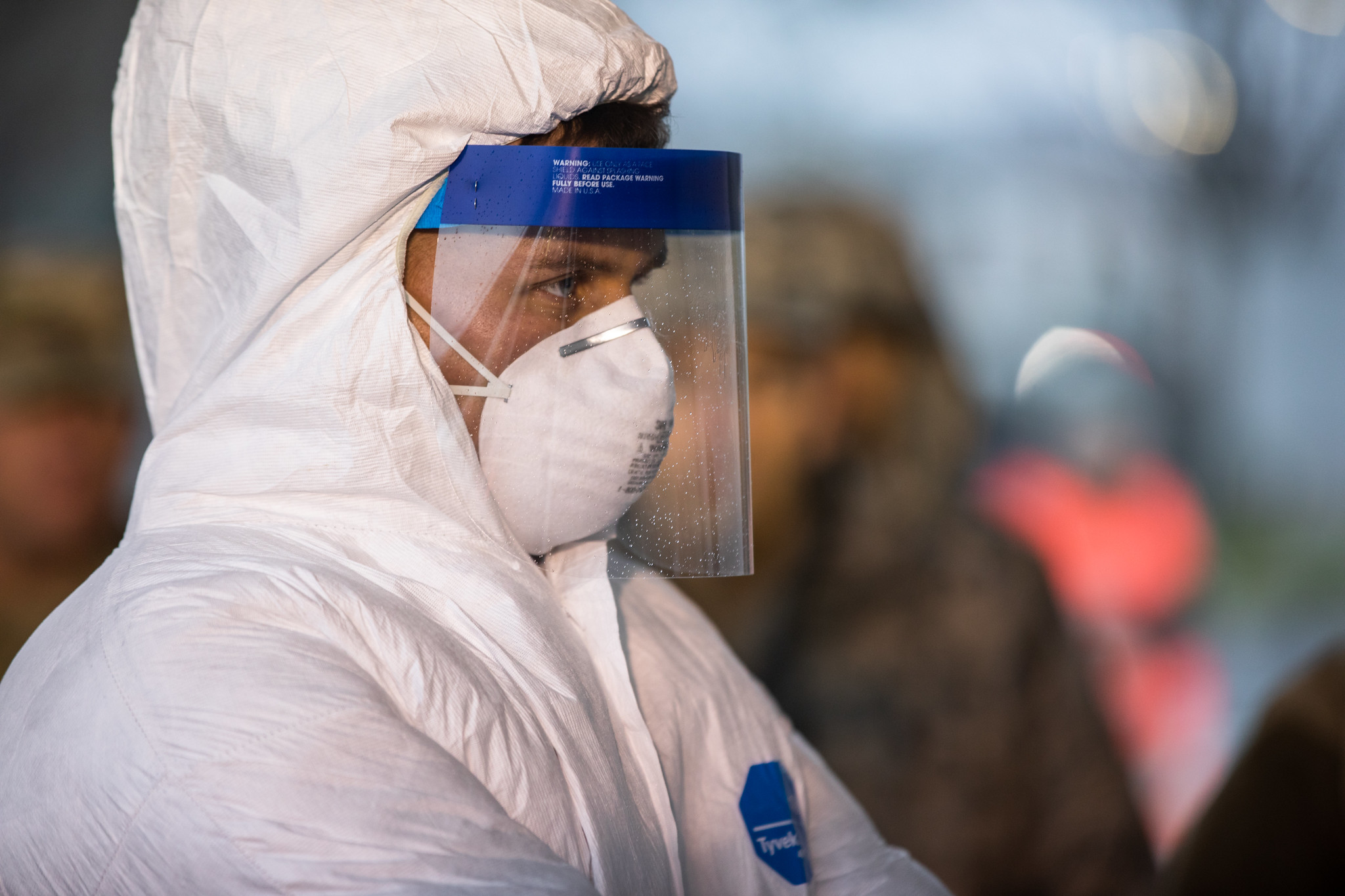
National Guard soldier wearing protective gear at a COVID-19 community-based testing site at the PNC Bank Arts Center in Holmdel, New Jersey. (New Jersey National Guard / Flickr)
For the better part of a year the world has battled SARS-CoV-2, a novel coronavirus that has killed nearly a million people and sickened tens of millions. In the United States the virus has wreaked havoc, particularly on older members of the population. Americans aged fifty-five and older account for more than 90 percent of the nearly two hundred thousand US COVID-19 deaths, while roughly 0.2 percent were people under twenty-five.
Efforts to quell the virus have brought additional pain. As of late August, roughly nineteen million Americans were out of work as a result of the pandemic, and food and housing insecurity has increased dramatically. But the pain caused by lockdowns has not been shared equally.
Elites have seen their stock portfolios balloon in value, and many professionals have been able to keep their jobs by working from home. It is the country’s poor and working-class households, particularly those with children, who have borne a disproportionate share of the burden. Lower-income Americans were much more likely to be forced to work in unsafe conditions, to have lost their livelihoods due to business and school shutdowns, or to be unable to learn remotely.