Where Do Sex Panics Come From?
Sex panics keep happening because they tap into Americans’ deepest fears about the need to protect innocents from the threat of evil — fears that are endemic among the Left as well as the Right. Meanwhile, lives are destroyed in the process.
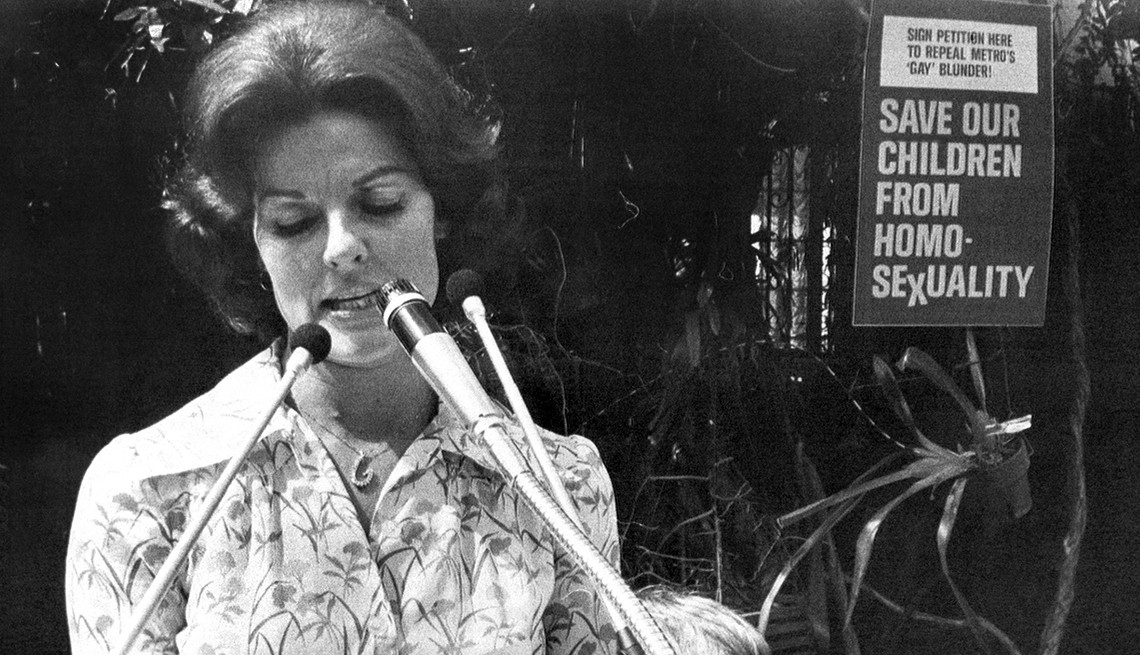
In 1977, Anita Bryant convinced voters to repeal a Florida county ordinance protecting gays and lesbians from discrimination with her Save Our Children campaign.
JoAnn Wypijewski’s new book, What We Don’t Talk About When We Talk About #MeToo: Essays on Sex, Authority and the Mess of Life, is a collection of her writing over several decades about sex, class, and liberation – and what we all lose when we surrender to moral panic. In the book, she explores and complicates narratives surrounding AIDS, the “pedophile priest” scandals that have plagued the Catholic church, #MeToo, and many others.
Liza Featherstone
What is a sex panic?
JoAnn Wypijewski
It’s a social eruption fanned by the media and characterized by alarm over innocence imperiled. That innocence, historically and stereotypically, has belonged to white women and children. The sex panic always involves some form of bad actor. Usually the bad man, the predator, is a lurking, mutable, social presence, a menace against which the population can be mobilized. Anthropologist Roger Lancaster calls this a “poisoned solidarity.” You can go back to Birth of a Nation. You can go back to the white slavery panic of the 1880s. Or a more modern period: the 1950s, where the Red Scare was a form of moral panic, and there was a “lavender panic” at the same time.