After the Beirut Explosion, Disaster Capitalism Has Lebanon in Its Sights
The explosion that devastated Beirut was an indictment of the parties that have misruled Lebanon for decades. Now, however, those parties are using the disaster as a pretext to deepen neoliberal policies, with French leader Emmanuel Macron and the IMF egging them on.
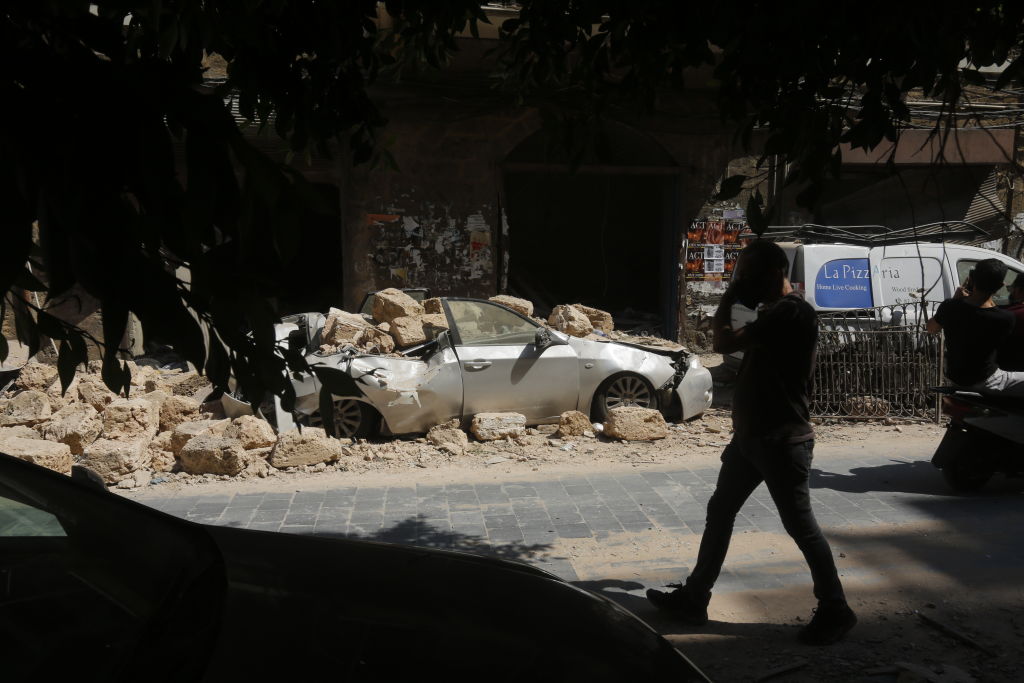
A car crushed by debris from a building, damaged by the explosion on August 5 in Beirut, Lebanon. (Marwan Tahtah / Getty Images)
On August 4, 2020, an explosion of unprecedented magnitude in Lebanon’s history occurred in the port of Beirut. It left more than 180 people dead, including Lebanese, Syrians, and other nationalities; more than 6,500 injured and 300,000 homeless. Dozens of people also remain missing, and entire districts of the Lebanese capital have been devastated.
The explosion devastated large parts of the port of Beirut, which received more than 70 percent of the value of the country’s imported goods in 2019. It also destroyed Lebanon’s strategic grain reserve. The material damage amounts to billions of dollars: the Lebanese authorities have put forward an estimate of $15 billion.
A Deepening Crisis
The explosion has made an already dire socio-economic situation unimaginably worse, after the economic crisis which developed in October 2019 and the effects of the pandemic. The pandemic drove the poverty rate to around 55 percent and increased unemployment to over 35 percent.