The Lebanese Uprising Continues
Among the mass protests that erupted across the globe in October last year, Lebanon’s were some of the largest, targeting both a failing neoliberal system and ingrained sectarianism. Now in their fourth month, the protests are showing no sign of diminishing.
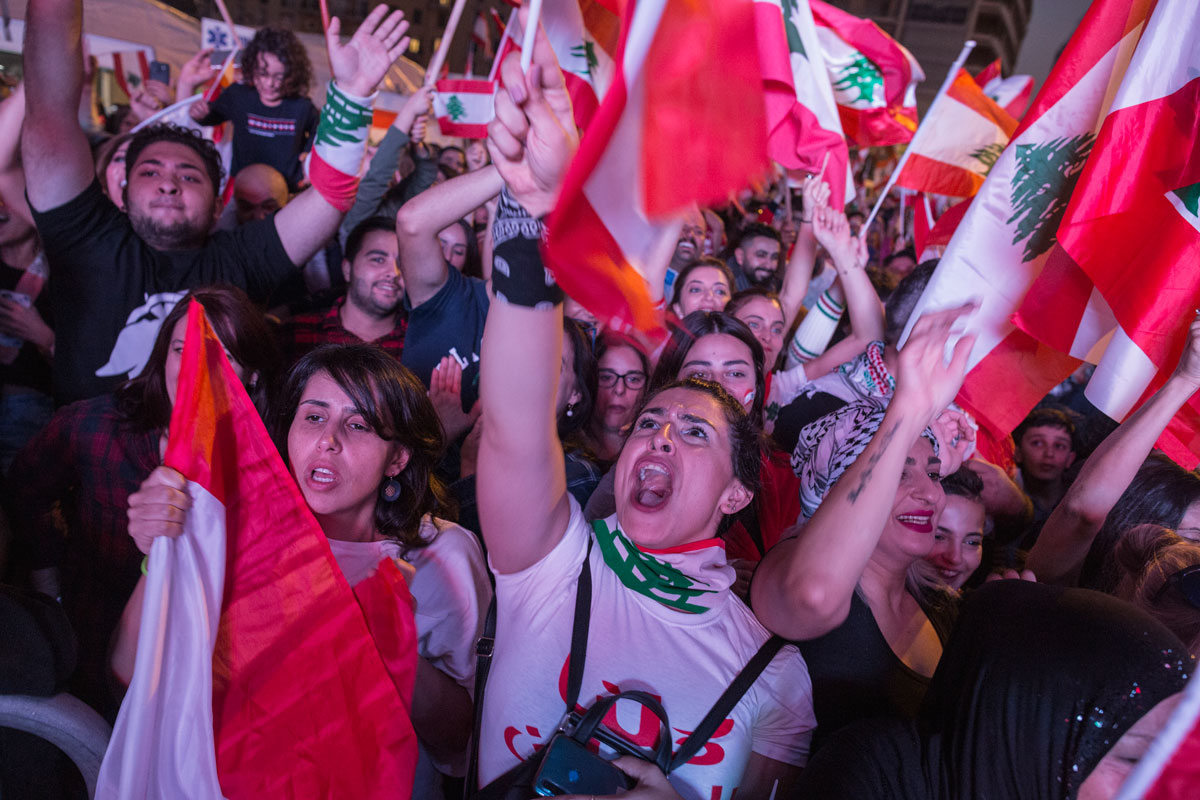
Anti-government demonstrators gather in Martyrs’ Square to listen to speeches and music as part of the ongoing protests, on November 3, 2019 in Beirut, Lebanon. (Sam Tarling / Getty Images)
For more than a hundred days, Lebanon has been beset by mass protests, seeing up to a million people in the streets of a country of less than seven million inhabitants. Now known as Lebanon’s “October Revolution,” the demonstrations have emerged in response to a range of issues, from anti-austerity, the government’s mismanagement of the climate disaster, and the full-scale rejection of the country’s sectarian political system, entrenched since the Civil War.
Now in its fourth month, the Lebanese protest movement is at a crossroads. Several government reshuffles have done little to placate the movement, and as the debt crisis worsens the government continues to seek IMF assistance, angering the protesters further. There are conflicting ideas within the movement about how best to proceed, and unions are just beginning to reassert themselves for the first time in decades.
To discuss the dynamics of the uprising, and its challenges going forward, Shireen Akram-Boshar spoke with Rima Majed.