Academic Freedom in Palestine Matters, Too
While many liberals agitate furiously against any boycott of Israeli universities, few pay attention to the ways in which academic freedom is already severely curtailed in Palestine.
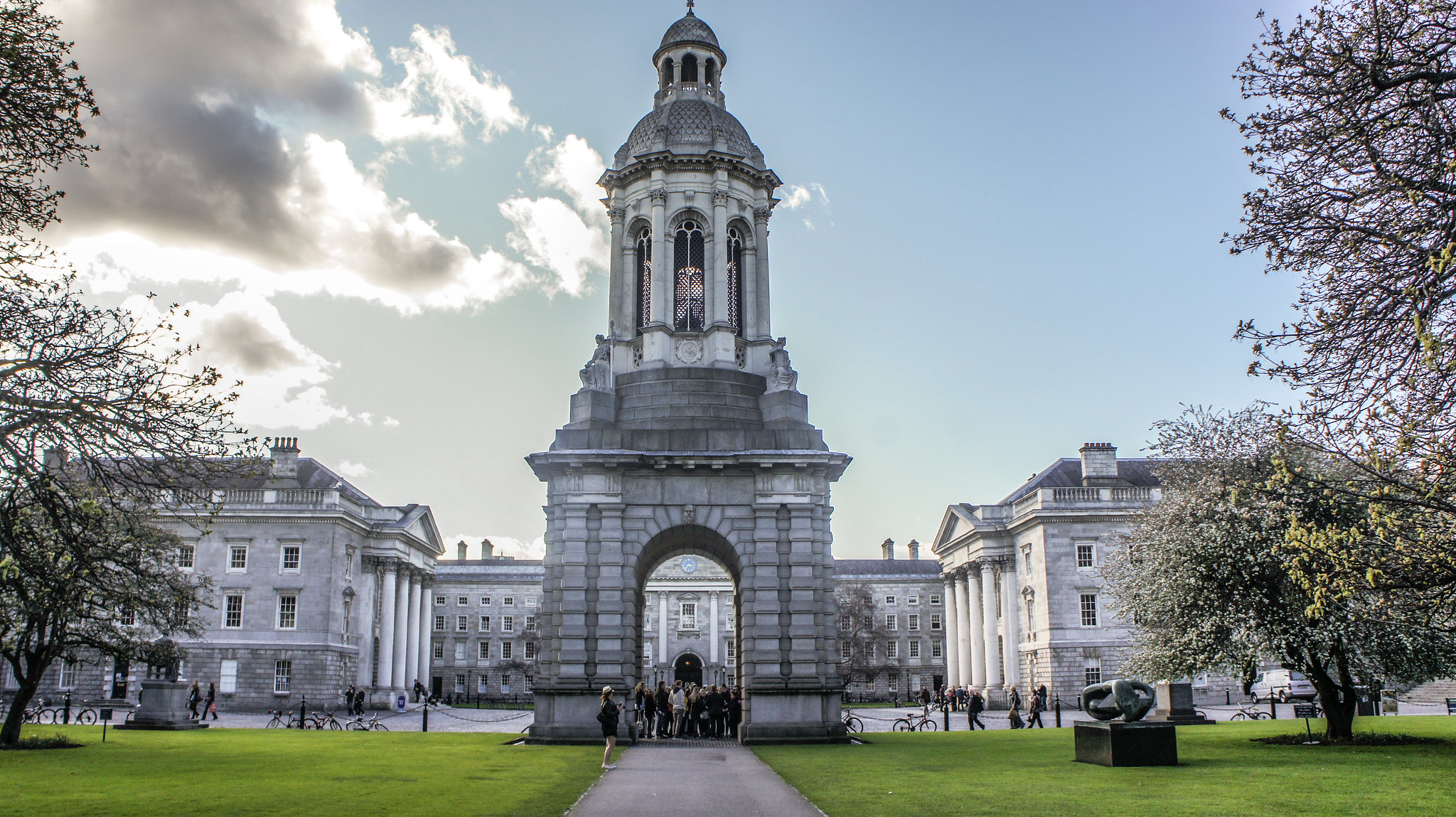
Trinity College Dublin in 2012. William Murphy / flickr
In Ireland, the history of boycott is a mixed one. The term has its origins in an episode in the Land War, a series of agrarian struggles in Ireland in the 1880s. Captain Charles Boycott, the agent for Lord Erne in County Mayo, sought to evict tenant farmers for nonpayment of rent. The farmers, organized by the Irish National Land League, reacted by ostracizing Boycott and his household. His workers went on strike, local traders refused to deal with him, and even the local post office refused to take his mail. The technique then became a central part of the rural struggles that drove land reform and fed ultimately into the ferment of the 1916 Easter Rising and the Irish War of Independence.
But the politics of boycott have more contemporary resonances in Ireland, too. Anti-apartheid campaigning was an important part of the Irish political landscape in the 1980s, and at one point, the Irish Anti-Apartheid Campaign could claim to have leading politicians on its membership lists. In 1984, a group of mainly female workers at a supermarket chain, Dunnes Stores, struck in compliance with a union decision for workers to avoid handling South African fruit. Despite facing isolation and poverty, these low-paid workers stood by their principles, and their strike lasted three years, until the Irish government banned imports from South Africa generally.
Conversely, in 1986, the politician and writer Conor Cruise O’Brien, a prominent liberal voice in the era of African decolonization, cemented his turn toward a Naipaulian contempt for liberation movements by deliberately flouting the academic boycott of South Africa. He took up an invitation to lecture at the University of Cape Town, cynically selling the story to the Sunday Times before he left London and bringing his adopted Congolese son Patrick with him. Student protests rapidly closed the UCT campus and halted his talks, but O’Brien’s arrogant maneuver was portrayed in the mainstream press as the muzzling of liberal dissent by Maoist fanaticism and as a crass attack on academic freedom. It may not be coincidental that O’Brien was writing his vast and uncritical potboiler history of Zionism and Israel, The Siege, at the time.