Karl Marx and the Corporation
More than 150 years ago, when the corporation as we know it today was still new, Marx saw in it both the essence of capitalism and a prefiguration of socialism: “The abolition of the capitalist mode of production within the capitalist mode of production itself.”
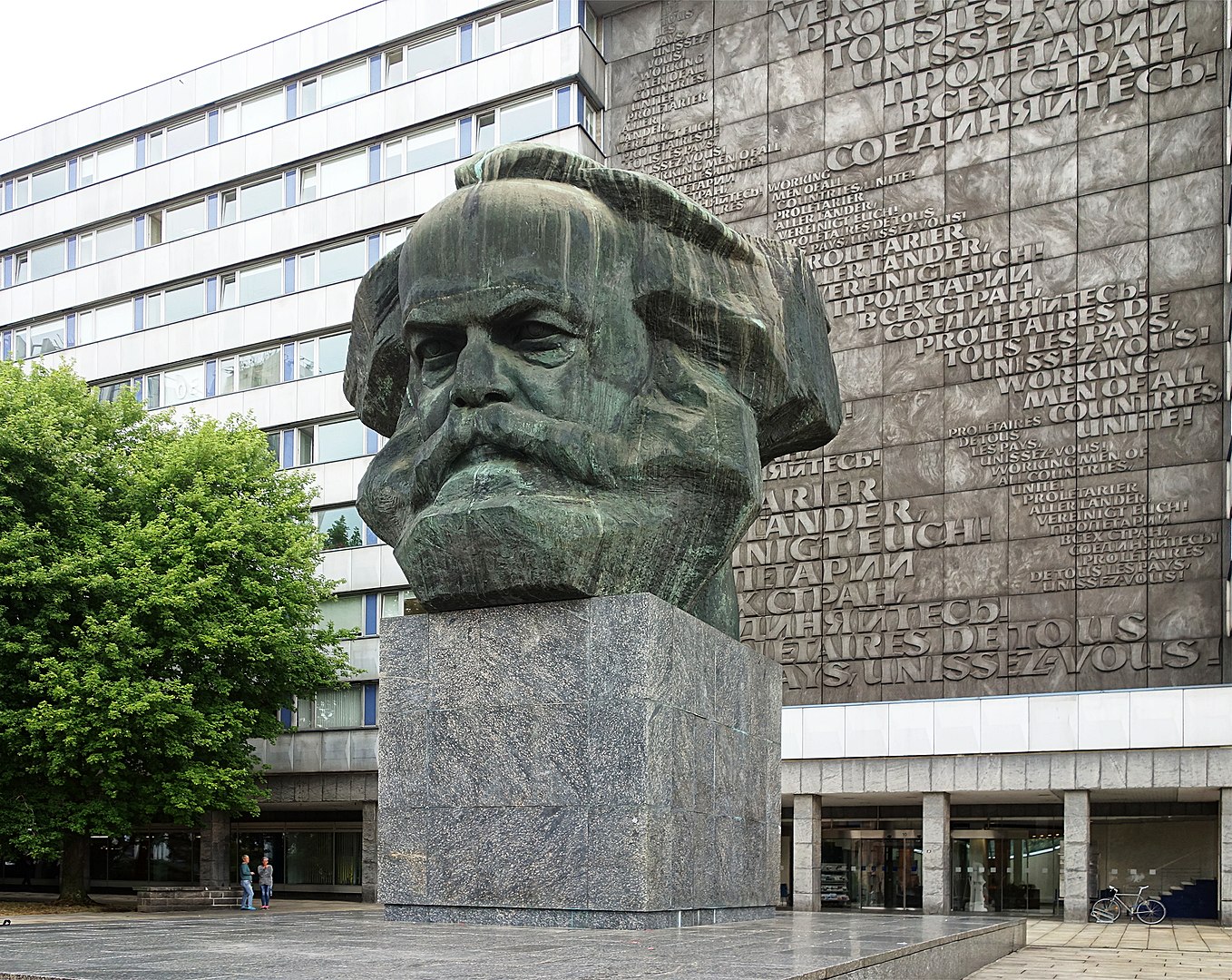
A monument of Karl Marx. (Wikimedia Commons)
Let’s begin at the beginning.
Capital, for Marx, is not a thing, it’s a social relation, a way of organizing human activity. Or from another point of view, it’s a process. It’s the conversion of a sum of money into a mass of commodities, which are transformed through a production process into a different mass of commodities, which are converted back into a (hopefully greater) sum of money, allowing the process to start again. Capital is a sum of money yielding a return, and it is a mass of commodities used in production, and it is a form of authority over the production process, each in turn.
When we have a single representative enterprise, managed by its owner and financed out of its own retained profits, then there’s no need to worry about where the “capitalist” is in this process. They are the owner of the money, and they are the steward of the means of production, and they are the master of the production process. Whatever happens in the circuit of capital, the capitalist is the one who makes it happen.