After the Bushfires and Amid the Pandemic, Australia’s Fossil Fuel Industry Is Gaining Steam
The Labor Party in Australia speaks a progressive language on climate change that it rarely enacts in policy. Now, under cover of the health crisis, the Victorian branch is expanding deforestation projects and onshore gas exploration.
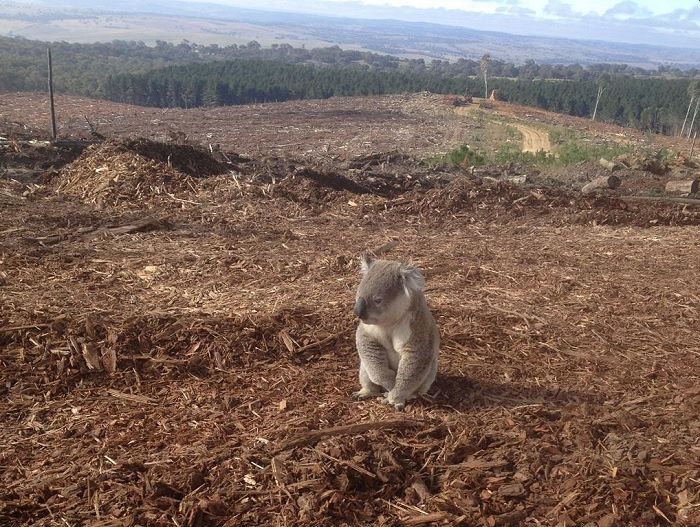
While we were distracted by the pandemic, Daniel Andrews extended agreements giving the timber industry exemption from conservation laws.
In early April, while we were fixated on flattening the curve, the global fossil fuel industry launched a lobbying blitzkrieg. The Australian oil and gas sector, struggling with plummeting prices and demand, joined the chorus crying poor. They asked to be prioritized in the post-COVID-19 recovery, demanding both subsidies and deregulation. Their friends in federal government happily obliged, pushing for expansions of coal mines, one of which is under Sydney’s water catchment, as well as a massive and subsidized expansion of natural gas production, including fracking.
There isn’t much hope that the Liberal Party of Australia will steer away from the hothouse-earth dystopia they seem hell-bent on driving us into. State governments, however, have all set targets of net zero by 2050. Out of seven states and two territories, the Australian Labor Party (ALP) holds government in five; they’re in a position to fill much of the yawning climate-policy vacuum, yet there’s not a state Labor government on track to meet its own targets.
It’s not just a question of lethargy. Victorian premier Daniel Andrews is from the left of the ALP and is sometimes hailed as Australia’s most progressive state leader. He is also one of the most popular premiers in the country, his already impressive lead bolstered by his government’s decisive response to the pandemic. Despite abundant political capital, for every step taken to mitigate climate collapse, he has taken two steps backward. Analysis in 2019 showed that under Victoria’s existing trajectory, it won’t reach net zero until 2062.