The Decline of Democracy in Hungary Is a Troubling Vision of the Future
Hungarian premier Viktor Orbán has used the COVID-19 pandemic as a pretext to silence his critics, even as he endorses street mobilizations by the organized far right. But these aren’t just the pathologies of a country with weak democratic traditions — they’re an extreme version of a reactionary turn happening across the West.
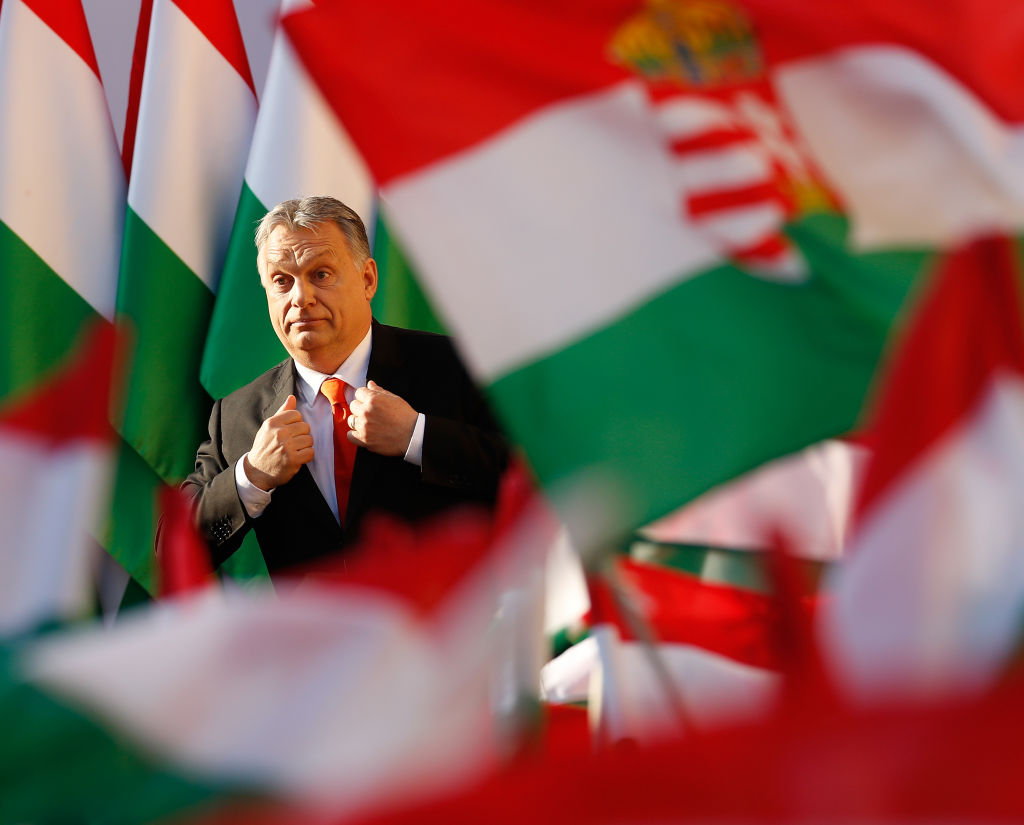
Hungarian prime minister Viktor Orban attends his Fidesz party campaign closing rally on April 6, 2018. (Laszlo Balogh / Getty)
When Hungarian prime minister Viktor Orbán used the COVID-19 pandemic to grant himself virtually unchecked power to rule by decree, watchdogs and commentators rang the alarm bells. Others suggested that this is more likely to be a vile yet clever public relations trick — a move to allow Orbán to present opposition objections as if they were obstructing efforts to fight the pandemic itself.
Yet developments since the bill’s passage suggest that pessimism about Hungary’s future was largely justified. There is clear evidence suggesting that something dark and dangerous is brewing. The European establishment — including the center-right European People’s Party, of which Viktor Orbán’s party is still a member — has, nonetheless, chosen to look the other way.
When Orbán came to power ten years ago and began dismantling democratic institutions, this peripheral European country looked like an idiosyncratic case, with little if any global significance. Yet today, from Modi’s India to Trump’s America, the world we live in is a very different place. Looking at the current heating up of racial and ethnic tensions and the intensifying repression all around the globe, we might ask if Hungary isn’t such a deviant case — and if it instead points the way to a terrifying new normality.