Want to Fight Poverty? Give Poor People Money.
Newly published research confirms that poverty fell in April and May thanks to federal coronavirus aid. You’d think that would convince policymakers to pursue more such aid, but they aren’t — because America’s approach to welfare is both wrongheaded and cruel.
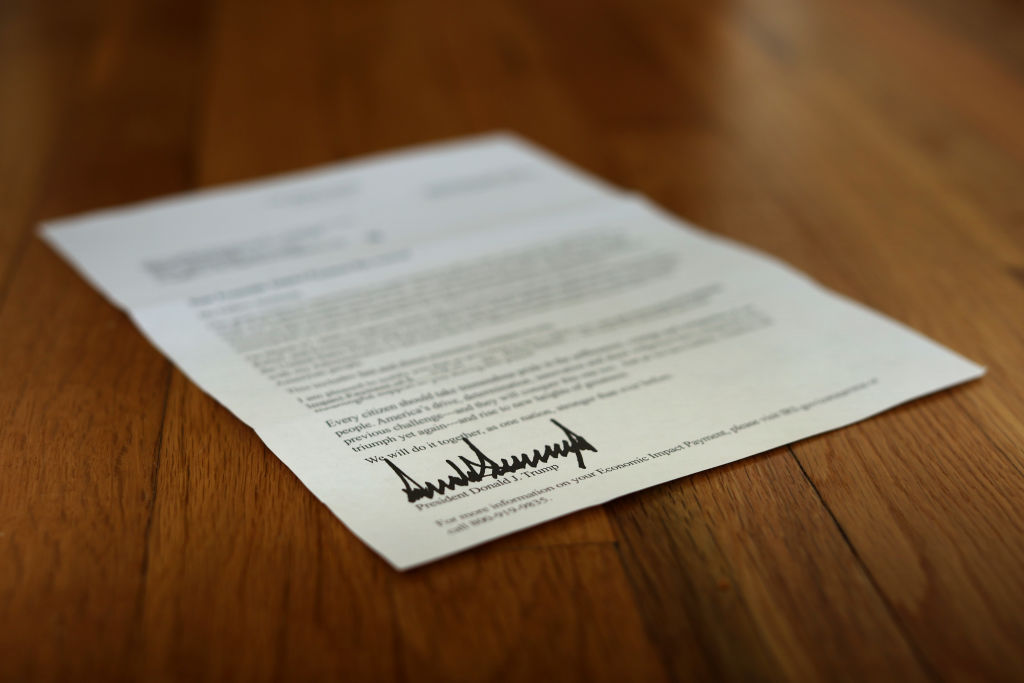
A letter bearing the signature of President Donald Trump was sent to people who received a coronavirus economic stimulus payment as part of the CARES Act. (Chip Somodevilla / Getty Images)
It may be inadequate and it may only be temporary, but the sudden federal injection of cash that accompanied the coronavirus made a significant difference to millions of lives.
That’s according to new research on the impact of government aid by teams based at Columbia University, University of Chicago, and University of Notre Dame, whose findings offer strong evidence that federal aid has successfully protected many low-income families at risk amid surging unemployment and unprecedented economic turmoil.
In the wake of the coronavirus crisis, Congress approved a number of measures designed to blunt the impact of mass layoffs and provide cash relief to those thrown out of work. These included means-tested one-off payments of up to $1,200 for individuals and $2,400 to married couples with no dependents and a considerable expansion of eligibility for unemployment insurance. These measures are not without their fair share of problems, coming as they have with a built-in expiry date, delays in reaching the needy, and no provisions for helping undocumented migrants.