Liberal Democracy Is in Trouble — And Liberals Won’t Save It
The term “post-democracy” refers to the recent process where democratic institutions have been hollowed out and citizens increasingly excluded from decision-making. But a serious response to this problem can’t just denounce its “populist” symptoms — rather, we need to examine the deeper social ills stemming from economic liberalism itself.
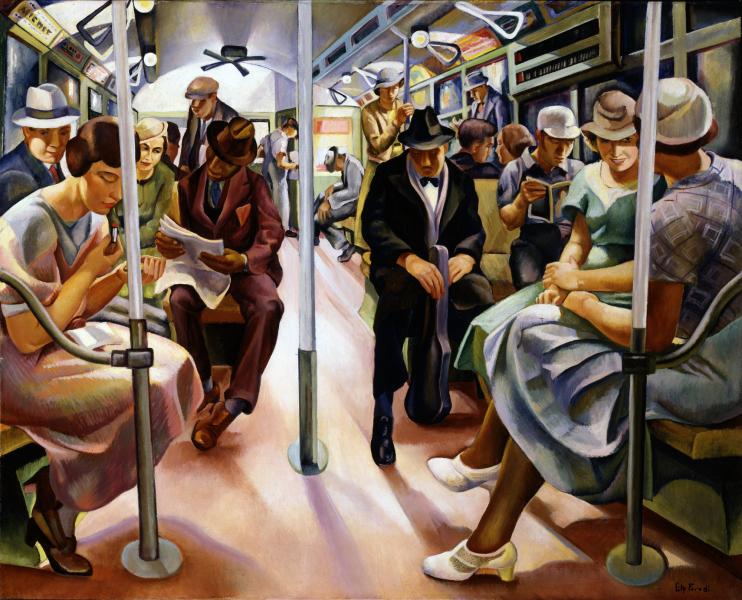
Subway by Lily Furedi (1934).
These are no easy times for liberal theorists. The multiple crises we are living through all seem to carry negative implications for the liberal order’s credibility — and its future. Rampant inequality, widespread political dissatisfaction, the rise of anti-liberal populist movements — and, indeed, the devastating consequences that the pandemic will have for a globalized economy — all seem to pose serious challenges to liberalism.
Even before the coronavirus outbreak, this was already a theme widespread in political science literature, from Edward Luce’s The Retreat of Western Liberalism, to William A. Galston’s Anti-Pluralism, and Patrick Deneen’s Why Liberalism Failed — a trend amplified by the growth of all sorts of populist movements. Furthermore, on the economic front, neoliberalism as “really existing liberalism” is blamed for many of the ills societies are experiencing, at a time of huge economic inequality and failing public services. The dominant atmosphere in liberal circles is thus, understandably, one of dejection and confusion. And all that liberal theorists seem to have to offer is an appeal to the lofty ideals of liberal democracy and trite pleas for a more “rational,” “well-informed,” and “balanced” politics.
This disorientation is reflected not only among unrepentant Blairites such as Yascha Mounk, but also among more progressive liberal political scientists that have been critical of the neoliberal involution of liberal democracy. The foremost example is Colin Crouch, emeritus professor at the University of Warwick. He is the theorist of “post-democracy” — a notion that has become widely used by sociologists and political scientists to express the progressive erosion of democratic accountability in a neoliberal era, marked by technocracy, the government of experts, and suspicion toward all forms of popular participation.