Governments and Corporations Have Deemed Immigrant Workers Expendable During the Pandemic
The coronavirus pandemic has exposed a deep contradiction at the heart of the US economy: immigrant labor is more essential than ever, yet immigrant workers continue to be under vicious attack by the government.
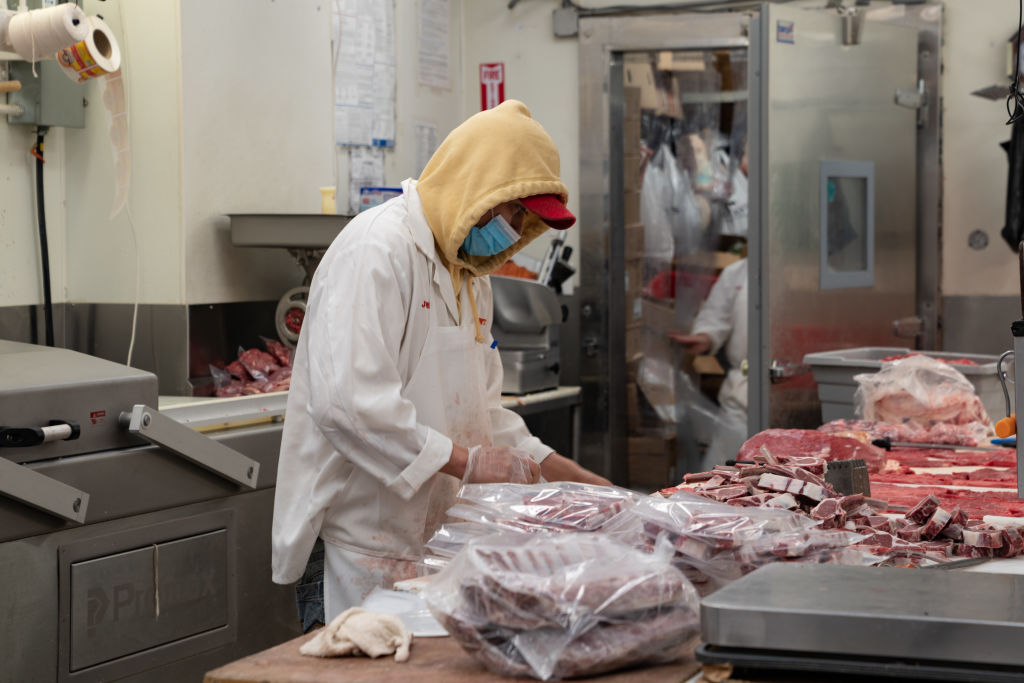
A butcher processes some meat at Vincent’s Meat Market on April 17, 2020, in Bronx borough of New York City. David Dee Delgado / Getty
Immigrants in food production have always been “essential workers.” Politicians and agribusiness executives are suddenly acknowledging this fact, out of a desire to maintain food production and keep supermarkets stocked. But these workers remain among those most exposed to the threats of the COVID-19 pandemic, particularly because policies that criminalize and exclude immigrants make them some of the people least protected from the dire effects of the crisis.
This double bind is especially clear in meat processing. In the United States, immigrants account for about one-third of the industry’s low-wage workforce. While this has always been toxic and dangerous work, cramped quarters designed to maximize line speeds, unsanitary conditions, and limited access to soap and water have created the ideal setting for outbreaks of COVID-19.
In rural regions of the country, meat-processing plants have been at the center of some of the most rapid spikes in viral transmission. At the Tyson meat factory in Perry, Iowa, 58 percent of workers have tested positive for COVID-19. At the Central Valley Meat Company in Hanford, California, at least 138 workers have confirmed cases. Of the twenty largest outbreak clusters in the country, 25 percent of them occurred at meat-processing facilities. As of May 5, at least ten thousand cases of coronavirus were linked to the meat industry. Some processing corporations have slowed their operations or closed down entirely to avoid further outbreaks.