In a Pandemic, We’re More Precarious Than Ever
Precarity has been rising for decades but now, in a pandemic, job insecurity meets physical vulnerability in new and terrifying ways.
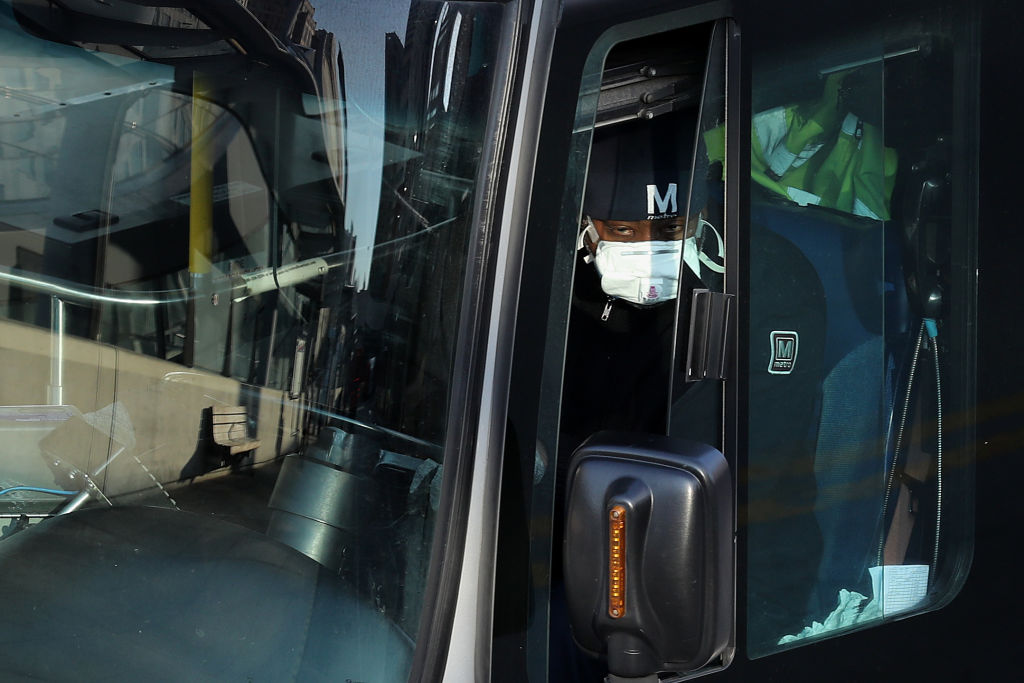
A bus driver wears mandatory face covering in an effort to prevent the spread of the novel coronavirus at the Sarbanes Transit Center April 16, 2020 in Silver Spring, Maryland.Chip Somodevilla / Getty
The tidal wave of panic at the COVID-19 pandemic has spurred massive emergency steps by states to control their populations’ movements and bolster wrecked economies. Now political analysts are squinting to spy, through the glare of crisis, the longer-term political ramifications of these official responses, previously seen only in wartimes.
It didn’t take long for the pandemic to exacerbate existing inequalities: while the army of “knowledge workers” can safely work from home, many are either continuing to go to work in unsafe conditions, or have already lost their jobs as a result of rapidly applied social-distancing measures.
As front-line workers are dying from the virus, and the ranks of the unemployed are swelling by the millions, precarity is rising everywhere. Yet even as societies rush (and must be pushed) to respond to this abrupt rise in precarity, we should also ponder what the pandemic exposes about how deeply and broadly precarity already had become ingrained in our lives, before this crisis hit.