US Sanctions on Iran Are Increasing Coronavirus Deaths
Iran is ravaged by coronavirus — and US sanctions are making the pandemic even more deadly.
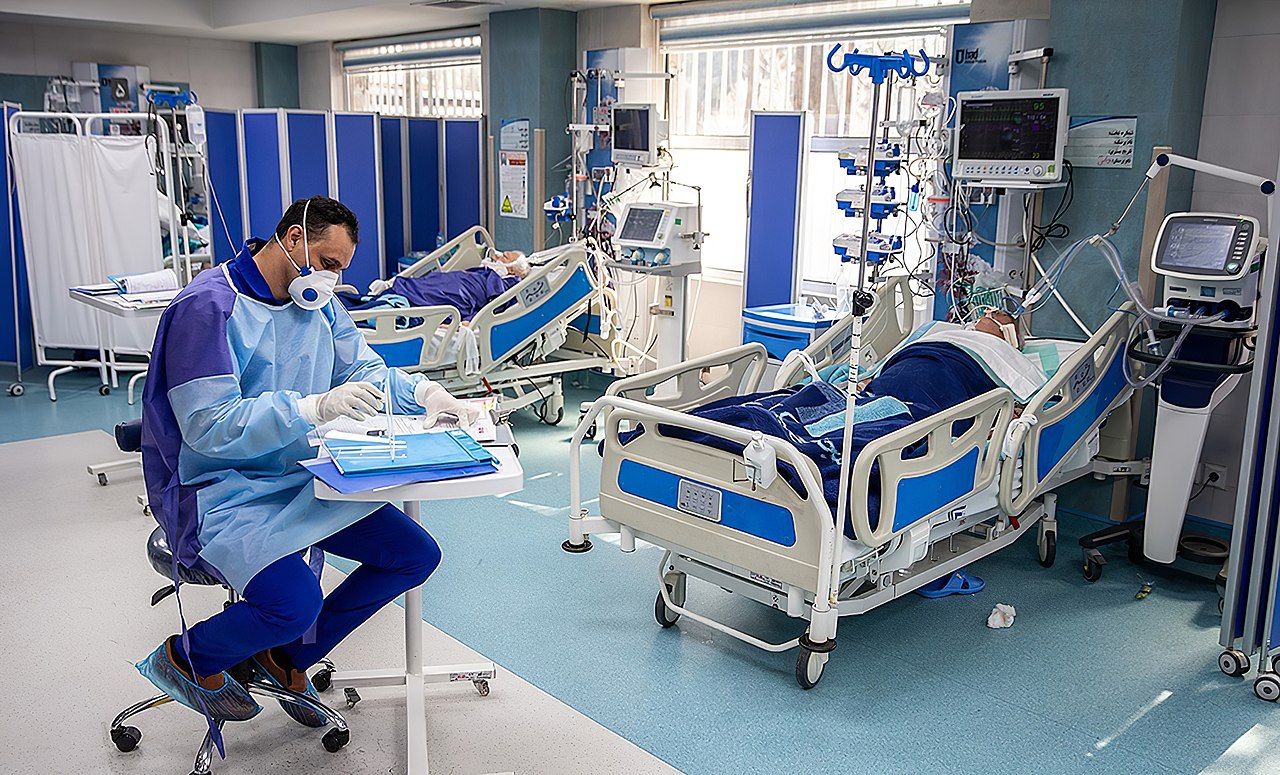
A doctor treats patients infected by coronavirus at the Imam Khomeini Hospital on March 1, 2020 in Tehran, Iran. (Mohsen Atayi / Wikimedia Commons)
Just as the global coronavirus pandemic is escalating profound injustices within the United States, it is also intensifying the brutality of the sanction regimes the United States imposes abroad. In Iran, one of the countries hardest hit by the coronavirus crisis, a complex web of sanctions imposed by the Trump administration — and abetted by Congressmembers of both parties — is choking off critical medical supplies to a country desperately in need. While this dip in supply is not new, the scale of the harm is, as doctors frantically try to respond to a catastrophe that now includes 16,169 confirmed cases and 988 deaths in Iran — numbers that are rising by the day. Amid these dire circumstances, the Trump administration announced Tuesday it is imposing a fresh round of sanctions on the country.
On March 12, Iran’s Health Ministry reported dire shortages of key supplies, including syringe and infusion pumps. At the Independent, reporter Negar Mortazavi notes that several companies were reluctant to sell testing kits to Iran over concerns about violating a complex web of sanctions, until the World Health Organization (WHO) stepped in and instructed them to. “A young father living in Tehran, whose cousin died at a local hospital at the beginning of the outbreak, told me he had all the signs and symptoms of coronavirus, and his death report even cited ‘suspected coronavirus’ as the cause of death — but he was not tested for the virus as there is a shortage and test kits are saved for those patients who are still alive,” Mortazavi writes.
Relief International, one of the few humanitarian organizations that has been bringing medical supplies into Iran, issued a stark warning nearly three weeks ago: “There is an extreme shortage of these supplies in-country, where stock is often low due to the steep price of medicines and medical equipment — a consequence of US sanctions.”