Why the Democratic Establishment Can’t Stand Rashida Tlaib
Rashida Tlaib doesn’t like Hillary Clinton, and Hillary Clinton certainly doesn’t like Rashida Tlaib. But the conflict isn’t just about personalities. It’s the inevitable result of the fact that the Democratic Party coalition contains forces whose interests are diametrically opposed to each other.
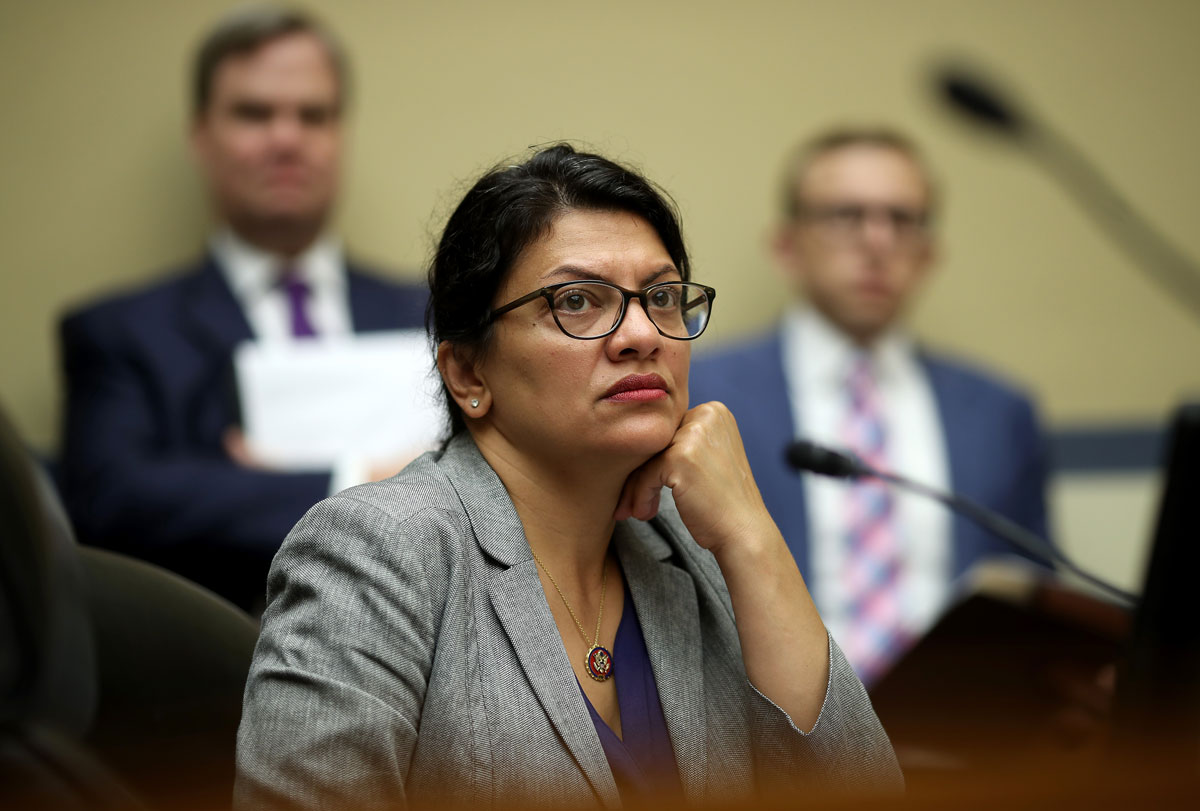
US Rep. Rashida Tlaib (D-MI) listens as acting Homeland Security Secretary Kevin McAleenan testifies before the House Oversight and Reform Committee on July 18, 2019 in Washington, DC. (Win McNamee / Getty Images)
On Friday, centrist pundits and party establishment loyalists wagged their fingers and clucked their tongues as a video circulated showing democratic-socialist congresswoman Rashida Tlaib booing Hillary Clinton. It was disappointing, they said: disrespectful, unbecoming, and, worst of all, a threat to party unity.
Never mind that the reason Tlaib felt compelled to boo Clinton in that moment — though, of course, there are many other good reasons — was that Clinton herself had recently been nursing a grudge in public, calling Tlaib’s political ally and fellow democratic socialist Bernie Sanders a widely disliked loser and spoiler on the eve of the Iowa caucus.
Many on the Left leapt at the opportunity to point out that Clinton’s interventions themselves had sown division and inflamed tensions in the Democratic Party. They correctly observed that centrists who call for party unity are often perfectly content to openly denigrate, dismiss, and actively disempower the Left. “Who’s posing the bigger threat to party unity?” some asked.