Lebanon’s Protest Movement Is Just Getting Started
The massive protest movement in Lebanon, now in its fourth week, is still far from its goal of systemic change. But the unprecedented demonstrations against austerity show no sign of slowing down.
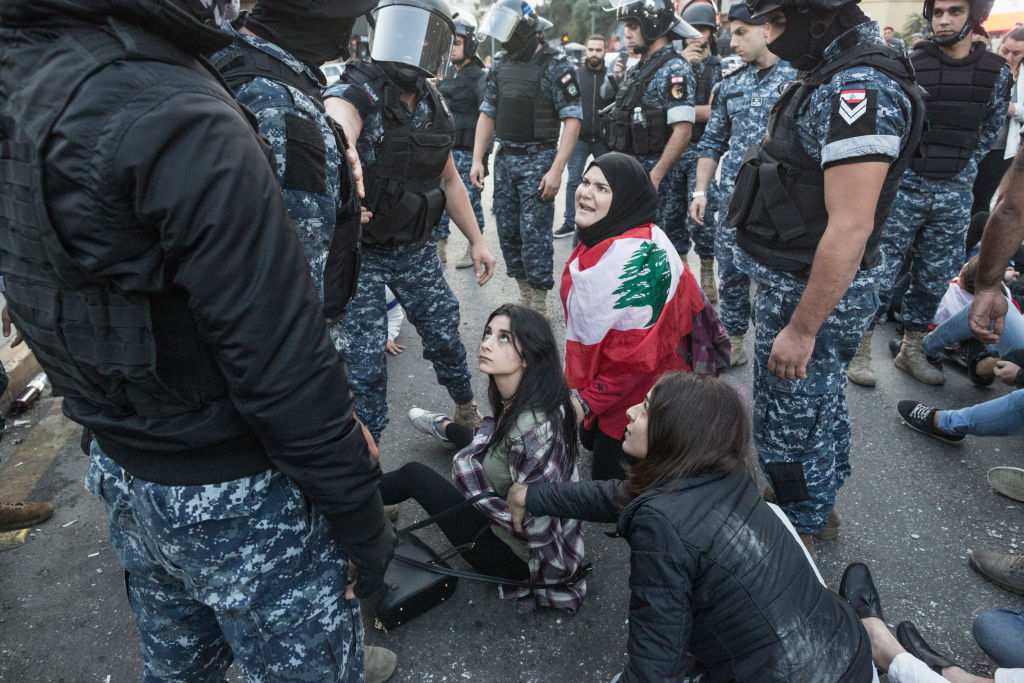
Riot police remove anti-government protesters occupying the “Ring” intersection on November 4, 2019 in Beirut, Lebanon. Sam Tarling / Getty Images
Defiant flames of protest and discontent have been spreading like wildfire across Lebanon for more than twenty days now. What began as actual conflagrations, engulfing more than three thousand acres of woodland from the North to the South, has transformed into flames of rage over deteriorating socioeconomic conditions and political stalemate.
The fires that ripped through the nation’s forests laid bare the ravenousness of the country’s system of accumulation and profit-making and its outright neglect of environmental and human needs. And no sooner were the flames extinguished than protests, strikes, and road blockades erupted on October 17, following a government decision to impose taxes on all online calling apps — what came to be known as the “WhatsApp tax” — and raise levies on fuel, cigarettes, and consumption.
The country has been grappling with serious socioeconomic woes that have culminated in dollar shortages, devaluation of the currency, and a months-long bread and fuel crisis, raising alarm bells among the wider population. Despite the government’s retreat from the tax plan, protests have grown and diffused in scope and scale. Attempts by political leaders to quell the anger and contain frustration have proved futile amid disillusionment and disgust at the litany of broken promises. In a recent interview with CNN, Lebanese central bank governor Riad Salameh conceded that an economic collapse is imminent.