We Need to Learn Lessons From Labour’s “Antisemitism Crisis”
The British Labour Party botched its response to false allegations of rampant antisemitism among the party membership. Left-wing movements in other countries can’t make the same mistake.
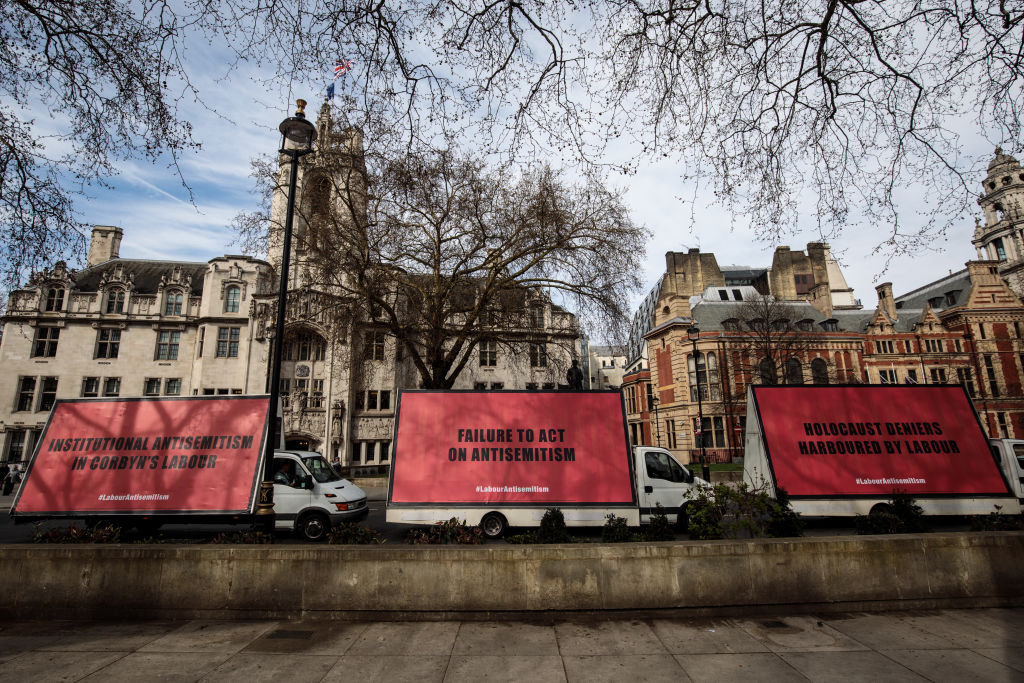
A convoy of billboard vans with messages against antisemitism in the Labour Party are driven around Westminster on February 21, 2018 in London, England.Jack Taylor / Getty
The campaign to depict the British Labour Party as a hotbed of antisemitism was, in its profile and its protractedness, unprecedented in modern British politics. One study tallied 5,500 national newspaper articles on the topic between 2015 and 2019. This remarkable proliferation stemmed from the campaign’s novel political character. Although Jewish and pro-Israel groups had frequently leveled the charge of antisemitism against the Palestine solidarity movement in the past, Jeremy Corbyn’s election as Labour leader saw such charges weaponized by the full breadth of Britain’s establishment, as it sought to discredit and defeat a popular insurgency.
Three distinct if overlapping networks pushed the story: the Conservative Party, the Labour Party’s own right wing, and Britain’s pro-Israel Jewish establishment. Each played an indispensable role. Tory and Labour-right allegations would have lacked plausibility without the validation of Jewish leadership groups, which also mobilized considerable resources behind the campaign. Conversely, the Jewish establishment’s vendetta against the Left would have gained little traction had it not been amplified by wider political and media elites.
The story of that campaign, its role in Labour’s 2019 election defeat, and the party’s failure to respond effectively to a torrent of disinformation is an important case study for left-wing movements in other countries — not least the United States, where a similar campaign may well be in the offing.