How Austria’s Greens Became the Right’s Best Ally
Austria’s right-wing chancellor Sebastian Kurz promises his coalition with the Greens will “protect both the climate and the borders.” But while the Greens have accepted a right-wing agenda on immigration, the partners’ shared neoliberal assumptions will hobble action on the climate.
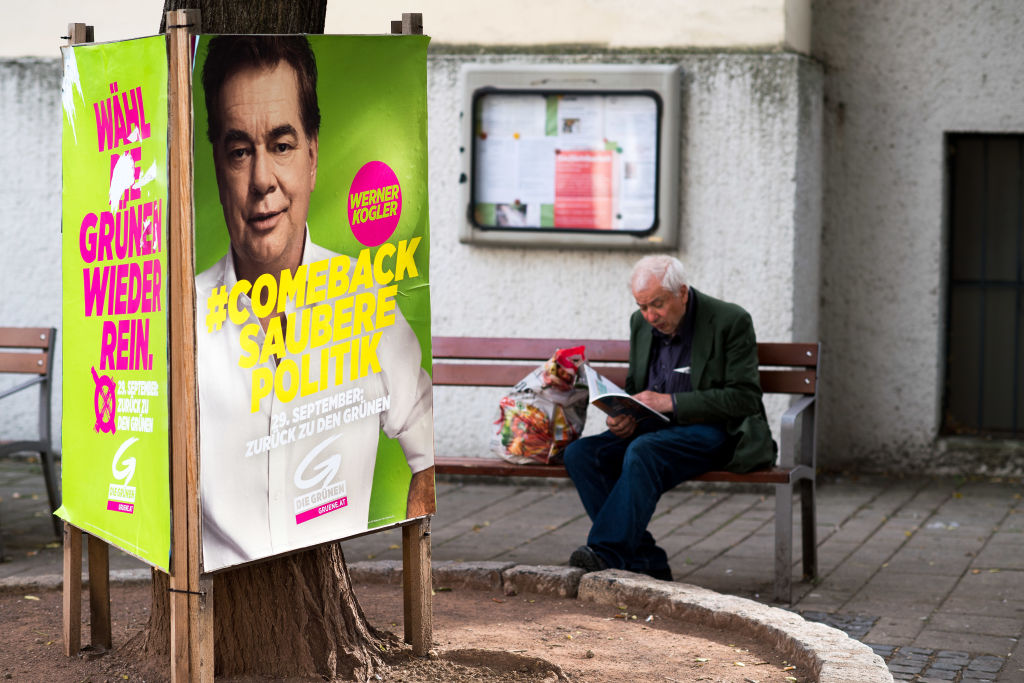
Election campaign posters of the Austrian Green Party prior to elections to the National Council on September 27, 2019 in Vienna, Austria.Michael Gruber / Getty
If a government uniting Austria’s conservative People’s Party (ÖVP) and the Greens may sound unusual, liberal media internationally have already hailed it as a “modern” and “progressive” project. The German daily Die Welt went so far as to depict the thirty-three-year-old chancellor Sebastian Kurz on its front page alongside Greta Thunberg, heralding the ÖVP leader and the climate activist as two “heroes of our days,” representing a new, young generation of leaders.
Such positive readings would suggest that this government is going to take climate change seriously — and perhaps also turn away from the national-populism of Kurz’s previous government, based on an alliance with the far-right Freedom Party (FPÖ). Yet a look at the new coalition does little to confirm such hopes. Austria faces the continuation of the authoritarian policies and right-wing realignment we saw over the last two years — this time, with a dash of green paint.
What Happened?
In one sense, Austria’s recent elections can be viewed as a political turning point. After all, since December 2017, the country had been ruled by a coalition of the Right and far right, also eased by Kurz’s reinvention of the traditional center-right party, since he became ÖVP leader the previous July. He pushed racist and anti-immigrant positions, paving the way for a common project with the far-right FPÖ.