Austria’s Right Turn
With the two parties of the Right entering into a coalition government, Austrians can expect more neoliberalism and more xenophobia.
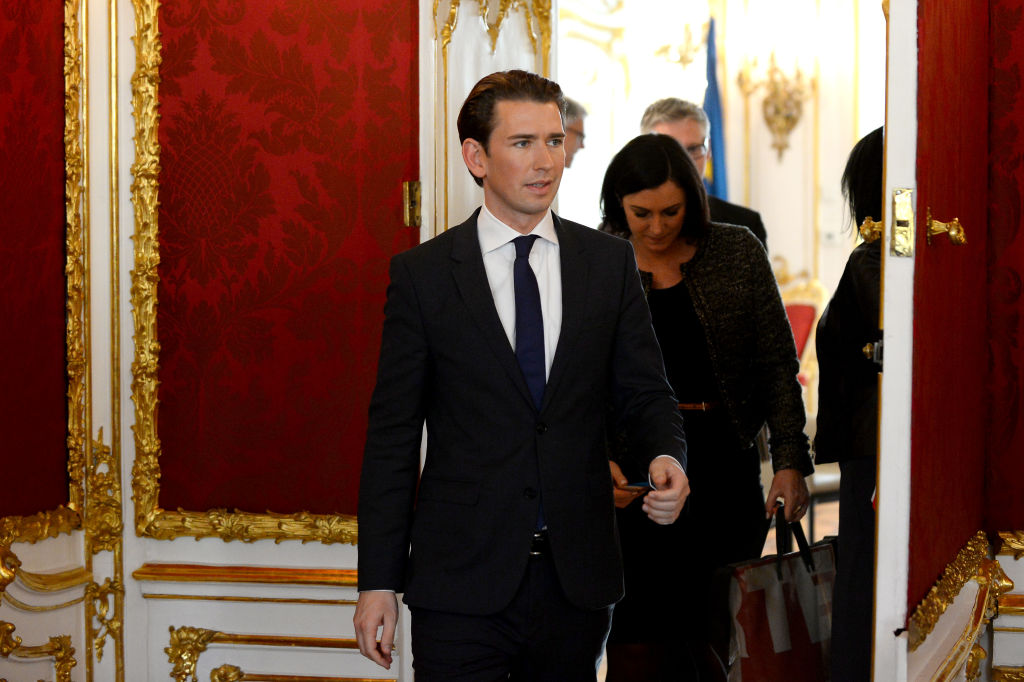
Austrian Foreign Minister and leader of the conservative Austrian People’s Party (ÖVP) Sebastian Kurz leaves a meeting with Austrian President Alexander Van der Bellen on October 17, 2017, the day of parliamentary elections, in Vienna, Austria.Thomas Kronsteiner / Getty Images
We will remember last Sunday’s general elections in Austria as a turning point in the nation’s postwar history, the culmination of a political dynamic that dates back to the 1980s, when the far-right Freedom Party of Austria (FPÖ) began its rise.
Austrian voters have elected the most right-wing parliament since 1945. The FPÖ gained 5.5 points, totaling 26 percent of the vote. But the undisputed winner was the conservative People’s Party (ÖVP), which rose from 24 percent in 2013 to 31.5 percent.
With a combined share of 57.5 percent of the vote and 103 (out of 183) MPs, the right bloc has never been larger. After you add in the neoliberal, pro-business “Neos,” who entered parliament with 5.3 percent, right-wing elements enjoy a two-thirds majority, giving them the power to potentially change constitutional law.