Malta’s Offshore Economy Is Corruption’s Greatest Ally
The murder of journalist Daphne Caruana Galizia provided a harrowing demonstration of Malta’s toxic nexus of political and corporate power. But the fight against corruption can’t rely on moral outrage alone — it has to free the mass of people from an economic model based on endemic patronage.
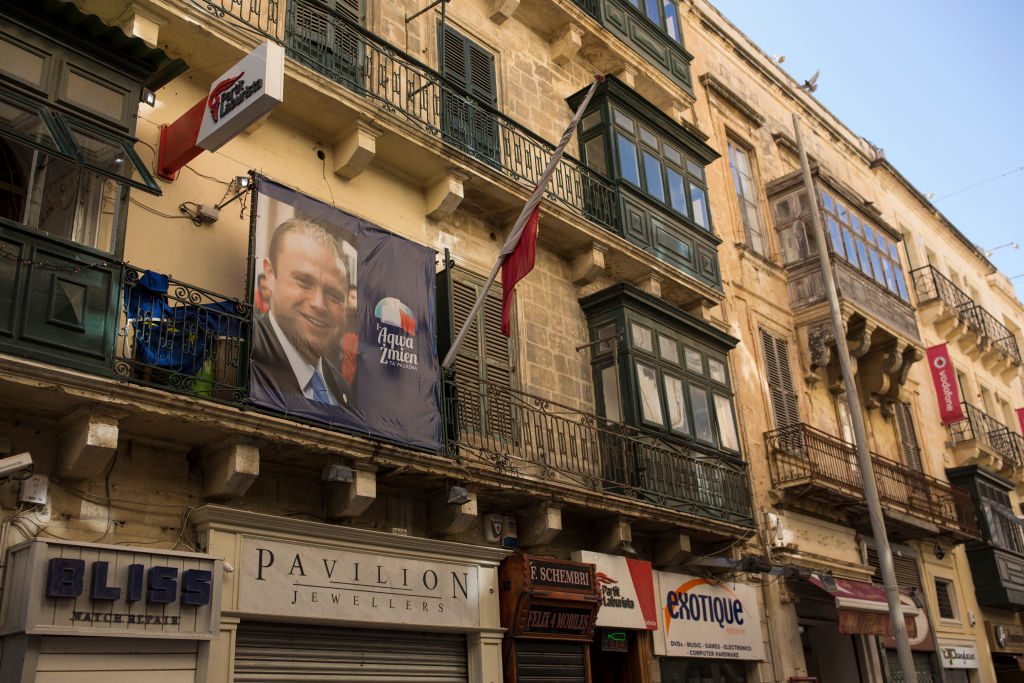
A poster of Joseph Muscat, the prime minister of Malta, that reads “aqwa zmien ta pajjizna” (“Best time of our country”) hangs on a street on March 11, 2018 in Valletta, Malta. (Dan Kitwood / Getty Images)
On November 20, just over two years after the assassination of journalist Daphne Caruana Galizia, Malta woke to news that a leading businessman had been apprehended while trying to flee the country on his private yacht. Yorgen Fenech’s attempt to escape was immediately linked to the murder — after all, he was directly involved in the high-profile corruption scandal the journalist had exposed in the wake of the Panama Papers.
This came just days after another striking headline, as investigators identified a middleman, arrested in a separate anti-money laundering case on November 14, who asked for a pardon in exchange for information on the mastermind behind the murder. This was a second breakthrough in the investigations since the arrest of three hitmen in December 2017.
The events have induced political crisis in Malta, but also stirred democratic mobilization. In a series of protests, citizens have insisted on justice for the slain journalist and accountability from the authorities. Since November 20, thousands have continued to gather in front of the parliament, the police headquarters, and the prime minister’s office calling for his immediate resignation and transparent investigations of his confidants. Today, it seems like the future of democracy in the island state depends on the protesters’ success.