Labor Rights Will Not Save the Labor Movement
Most proposals to revive the labor movement focus on expanding labor’s rights. But the “rights” framework hampers working-class solidarity and makes unions subordinate to the state. To build working-class power, we should focus instead on labor freedoms.
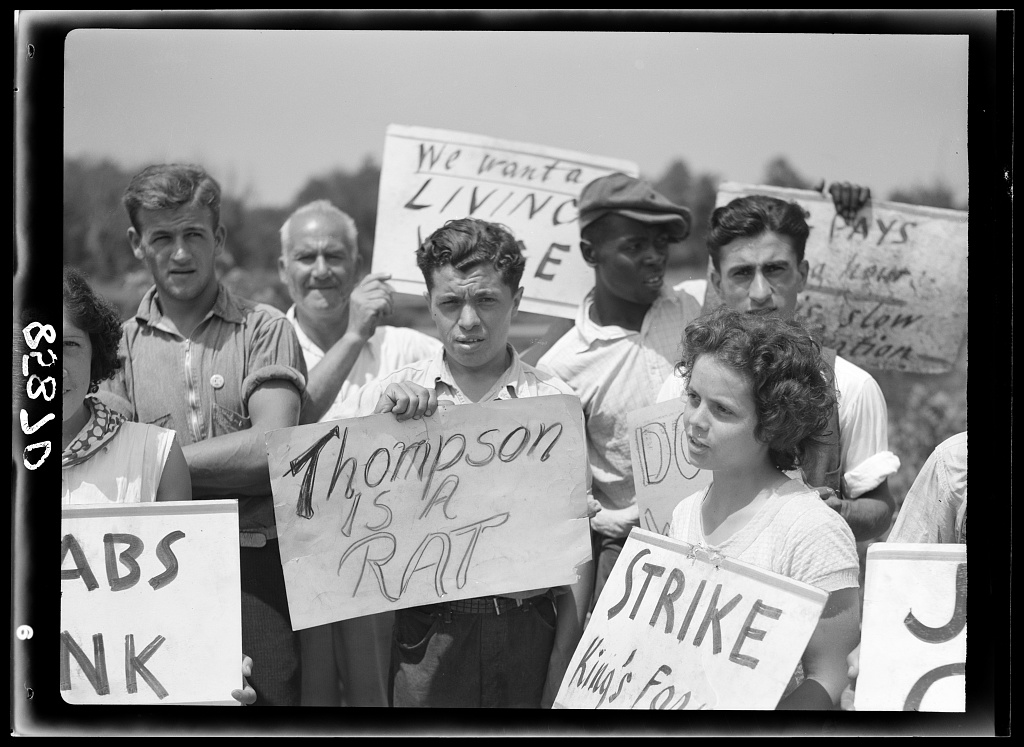
A picket line at the King Farm strike near Morristown, Pennsylvania, in August 1938. John Vachon / Library of Congress
Everyone agrees that labor law is broken. Under the auspices of the National Labor Relations Act (NLRA) — which was passed in 1935 at the height of the New Deal and laid the foundation for our current regime of collective bargaining — union membership rates have declined to existentially low levels. Though the weaknesses in labor law have been glaringly apparent for some time, and intermittent attempts have been made to reform it, discussion about labor law reform is now reaching a critical mass.
Labor law reform has been central to the campaign promises of both Bernie Sanders and Elizabeth Warren. There is much in common between the Sanders and Warren plans, though the level of detail in the Warren plan burnishes her reputation as a technocrat. Liberal think tanks have jumped on board. Left-leaning publications have also directed their attention to labor law reform.
What unites most of these proposals is the idea of strengthening labor rights. I wrote an essay recently in Catalyst arguing that this approach is wrong. The labor movement should be wary of labor rights and instead seek to expand labor freedoms.