The Legacies of the Ethiopian Student Movement
Fifty years ago, a student movement transformed Ethiopia with radical calls for self-determination and land reform. But while the movement helped bring down the monarchy, the Ethiopia they fought for has never come to pass.
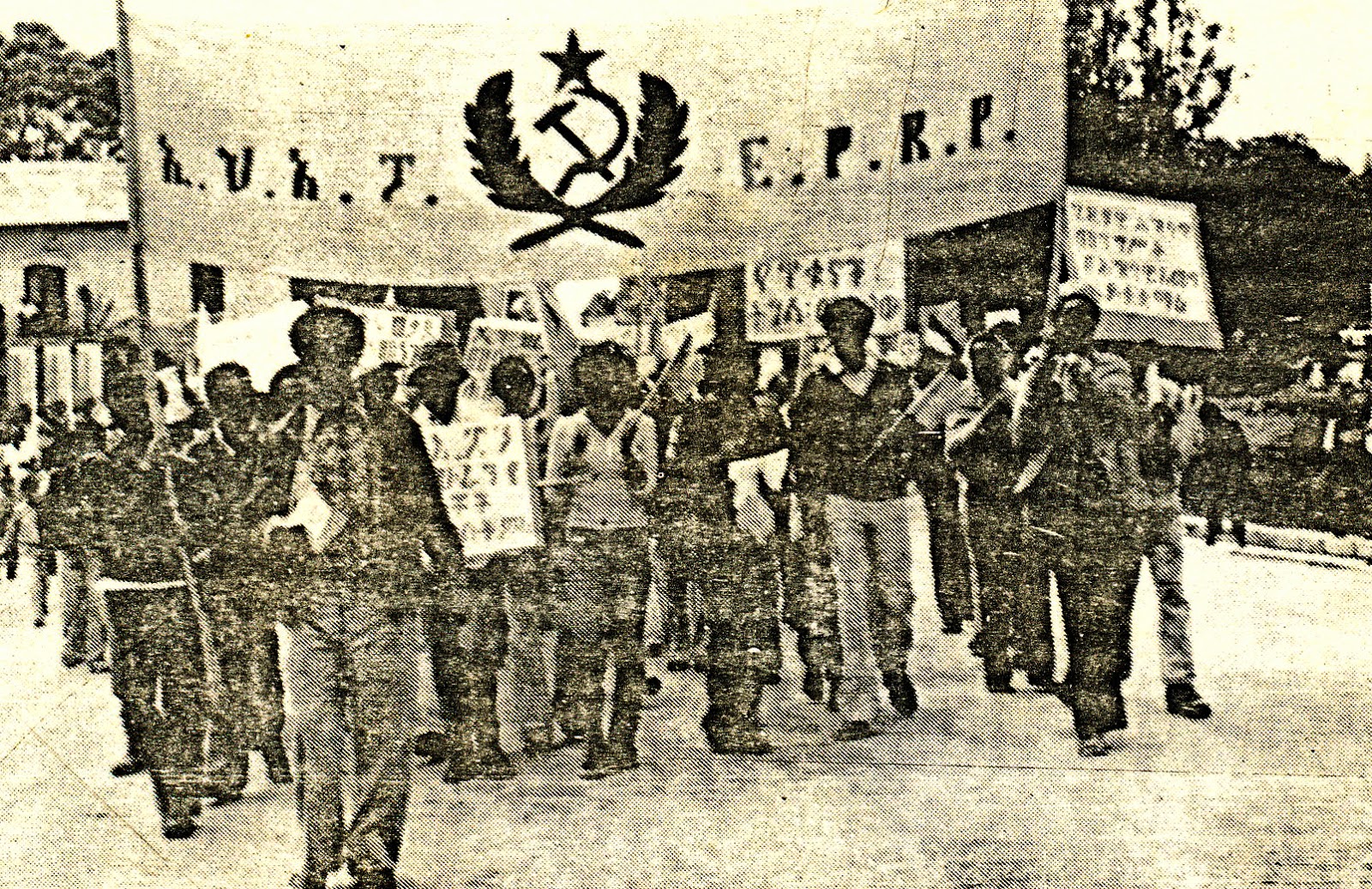
The Ethiopian People’s Revolutionary Party (EPRP) was part of the country’s student movement that began in the late 1960s and continued through the 1974 revolution.
In countries throughout the world, the 1960s, and 1968 in particular, were a time of political unrest. Ethiopia was no exception, with demonstrations and student rebellion taking aim at the dominant social order. However, as historian Bahru Zewde argues in his book The Quest for Socialist Utopia: The Ethiopian Student Movement c. 1960–1974, it was really 1969, rather than 1968, that was the pivotal year in Ethiopia, eventually culminating in the East African country’s 1974 revolution.
From the beginning of the decade, it was obvious that many in Ethiopia were displeased with the ruling monarchy and the feudal land structure it oversaw. In 1965, students flooded into the streets of Addis Ababa, the nation’s capital, chanting the slogan “Land to the Tiller.” Their target: the land system that impoverished the country’s large farming population.
Demonstrations expanded in subsequent years, and “the national question” was added to the mix of grievances. Living in a country with scores of languages, ethnicities, and traditions, many Ethiopians felt that the ruling class was dominated by a small, select group — the wealthy Amhara contingent. They drew on ideas of pluralism and self-determination to contest the monarchy, led by Emperor Haile Selassie.