The Right’s Continued Dominance in the Dominican Republic
After two decades of rule by the reactionary Dominican Liberation Party reign, the task of democratizing the Dominican Republic remains a difficult one.
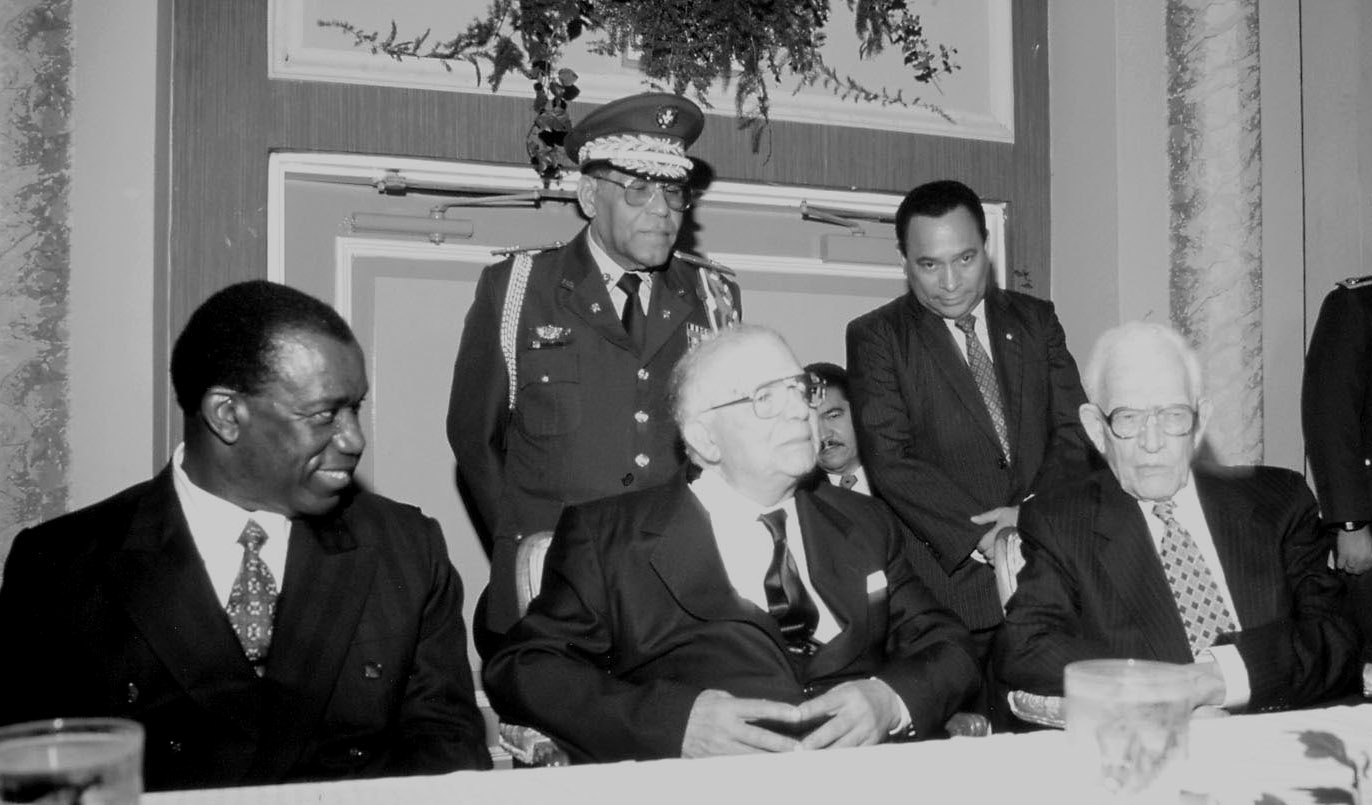
José Francisco Peña Gómez, Joaquín Balaguer, and Juan Bosch
Over the past two decades, reactionary politicians in the Dominican Republic have expanded their influence under the governing Partido de la Liberación Dominicana (PLD, Dominican Liberation Party), which has held presidential power for eighteen of the past twenty-three years since 1996. Except for a brief hiatus from 2000 to 2004, the neoliberal, center-right PLD has been in power until now. As payback to right-wing electoral support, the PLD leadership have given right-wing politicians access to power including top positions in government agencies and embassies — and, most important of all, a platform that, over the years, revitalized right-wing ideology.
By the 1990s, the formerly center-left PLD had won the support of powerful local elite sectors with a politics of moderation. In turn, traditional and conservative rich sectors began to bankroll the PLD’s electoral campaigns, accelerating the PLD’s transformation from a progressive, center-left party once led by a self-declared Marxist into a neoliberal party that is today on the center right of the country’s political spectrum.
The PLD’s right turn happened at the very moment when the Soviet bloc was beginning to disintegrate, an epochal change that reverberated in Latin America and the Caribbean and weakened, divided, and demoralized left-wing intellectuals, progressive organizations, and Communist parties.