Labour Can Make a Radically Fairer Britain
If its plans are carried out, Jeremy Corbyn’s Labour Party will radically transform the UK’s economic geography — shifting power and wealth out of a few tiny corners of London, and placing both into the hands of workers across the country.
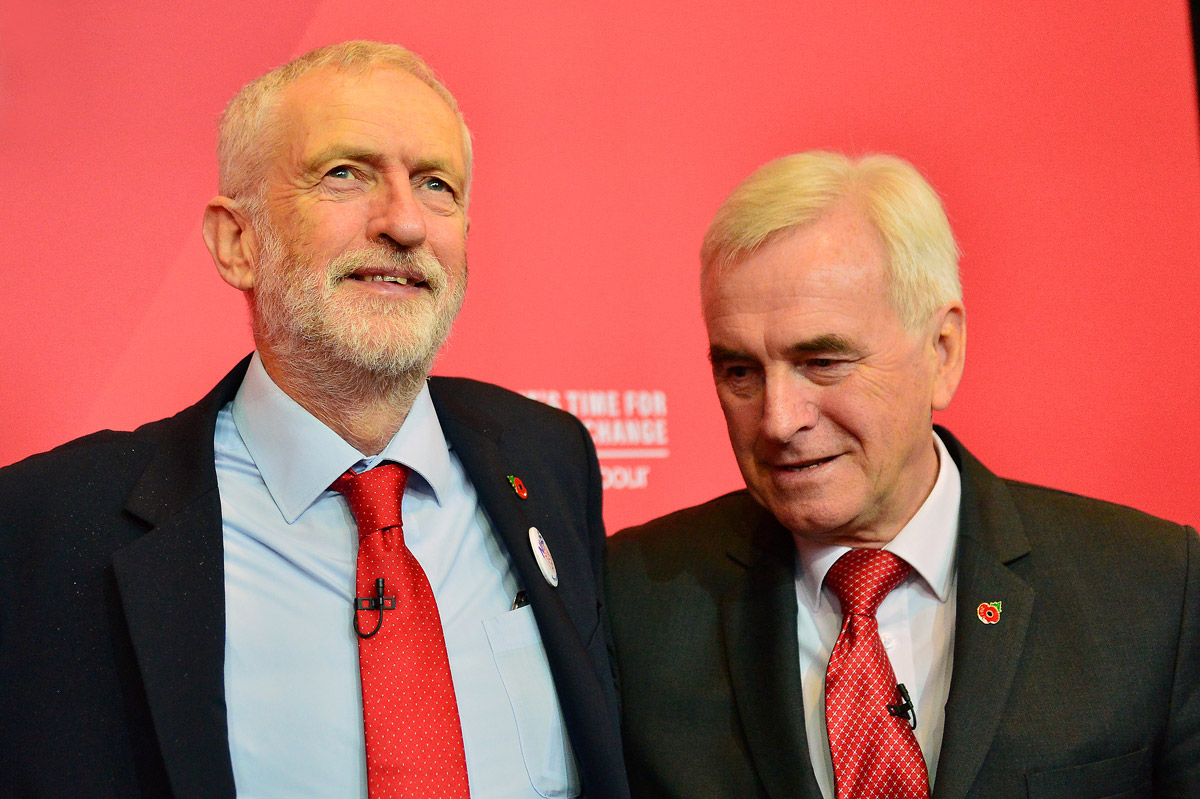
Labour Party leader Jeremy Corbyn stands with Shadow Chancellor John McDonnell after his major speech on the economy at the Invisible Wind Factory on November 7, 2019 in Liverpool, England. (Richard Martin-Roberts / Getty Images)
Shadow Chancellor John McDonnell has laid out an extraordinarily bold package of investment for the British economy. If carried out, the scale being proposed would be sufficient to radically transform the economic geography of this country — shifting power and wealth out of a few tiny corners of our capital city, and placing both into the hands of working-class communities across the country.
We would emerge, at the end of the ten-year period envisioned for the whole program, into a radically different Britain: the investments would lock into place the fairer, sustainable economy at the center of Labour’s vision. With £400 billion of capital investment overall, including £150 billion in a five-year Social Transformation Fund necessary to rescue our public services, the shift in the balance of economic power implied would be the biggest since the Industrial Revolution briefly challenged the supremacy of the City of London.
Doubts have come from predictable quarters. Today’s headlines have centered on the expense of this — but as even Tory Chancellor Sajid Javid points out, with government borrowing costs so low as to be below zero in real terms, now is the ideal time to borrow to invest. Paul Johnson of the Institute of Fiscal Studies (IFS) has raised a different objection to the plans, expressing his disbelief in the Times that this scale of spending contemplated by Labour could be attempted. Yet a sober assessment of the economic mess the next Labour government will inherit suggests it will have little choice but to commit to major investments — and that’s even before we think about creating an economy for the future.