Chicago Teachers Show Again How to Fight and Win
The Chicago Teachers Union’s two-week strike ended yesterday. Like their 2012 walkout, this strike fought for a broader range of demands for Chicago students and won major victories on pay and benefits — and it did so against a mayor, Lori Lightfoot, who campaigned on progressive promises only to abandon them immediately after taking office.
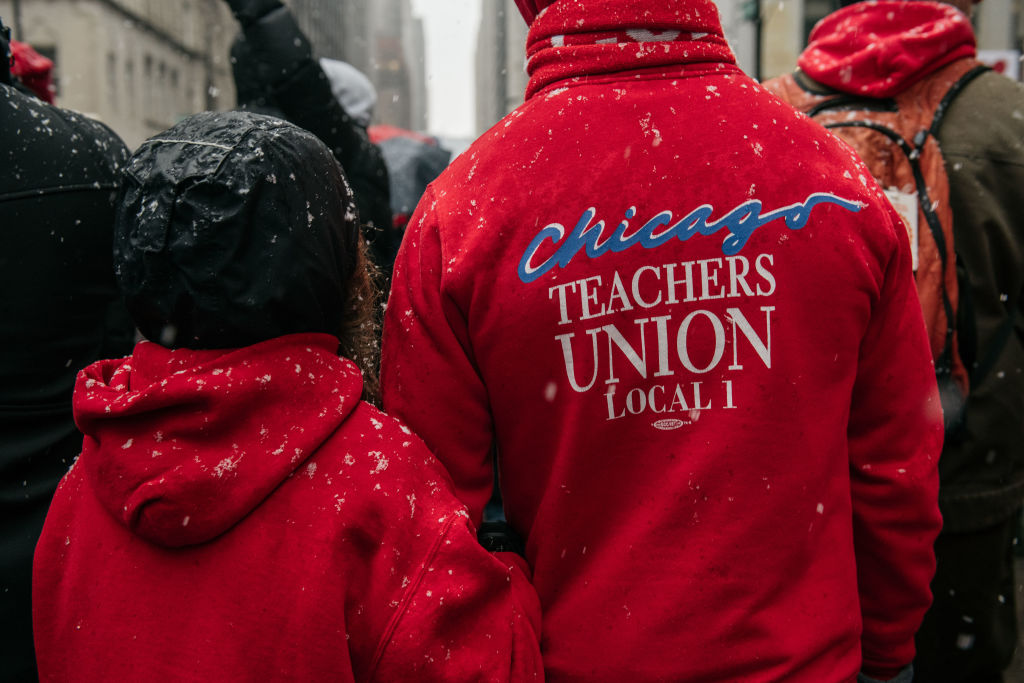
Braving snow and cold temperatures, thousands marched through the streets near City Hall during the eleventh day of an ongoing teachers’ strike on October 31, 2019 in Chicago, Illinois. (Scott Heins / Getty Images)
On Thursday, the Chicago Teachers Union (CTU) ended its eleven-day strike after reaching a tentative agreement with the city’s school board on a five-year contract. The contract includes class size reductions, staffing increases, and improved compensation. But the scope of what the teachers fought for, and what they accomplished, goes beyond the terms enshrined in the contract. They used the strike to take aim at some of the city’s most inequitable policies and worst actors, and asked Chicagoans to consider what kind of city they want to live in.
The longest teacher strike in Chicago since 1987, it built on the 2012 strike — and the nationwide educator-led strike wave it helped initiate — in both length and latitude. The legal and logistical obstacles they faced included a 2011 state bill championed by then-Mayor Rahm Emanuel that requires 75 percent of CTU all of membership’s approval to strike, widely considered at the time to be prohibitive; the 1995 GOP-passed Chicago School Reform Act, which narrowed the areas in which the CTU could legally negotiate, excluding even issues like class size; and whether the public would support the teachers’ third strike threat in seven years.
The new obstacle was a mayor who campaigned on a progressive platform and deviated sharply from it during bargaining. Unlike Emanuel, who swept into office and followed through on pledges to “reform” Chicago’s flailing school system through privatization and austerity (for which he belatedly and cravenly apologized), Lori Lightfoot the candidate explicitly pledged to invest money and resources back into public education. In many areas, such as ensuring sufficient staffing, improving mental health services, and implementing an elected school board, her promises aligned with the demands teachers were making. While her background serving on Emanuel’s police accountability board and working to advance Republican legislative goals gave many doubts about her convictions (including the CTU, which endorsed her opponent, Toni Preckwinkle, in the runoff election), many Chicagoans hoped she would be a force for progress in CPS. “I’m not Rahm,” she herself stated.