Britain’s Future Will Be Decided in Six Weeks
In December’s UK election, everything will be up for grabs. The Tories are nervous, but Labour has its work cut out for it. Above all, it must shift the focus of debate from the Brexit melodrama to the ravages of austerity.
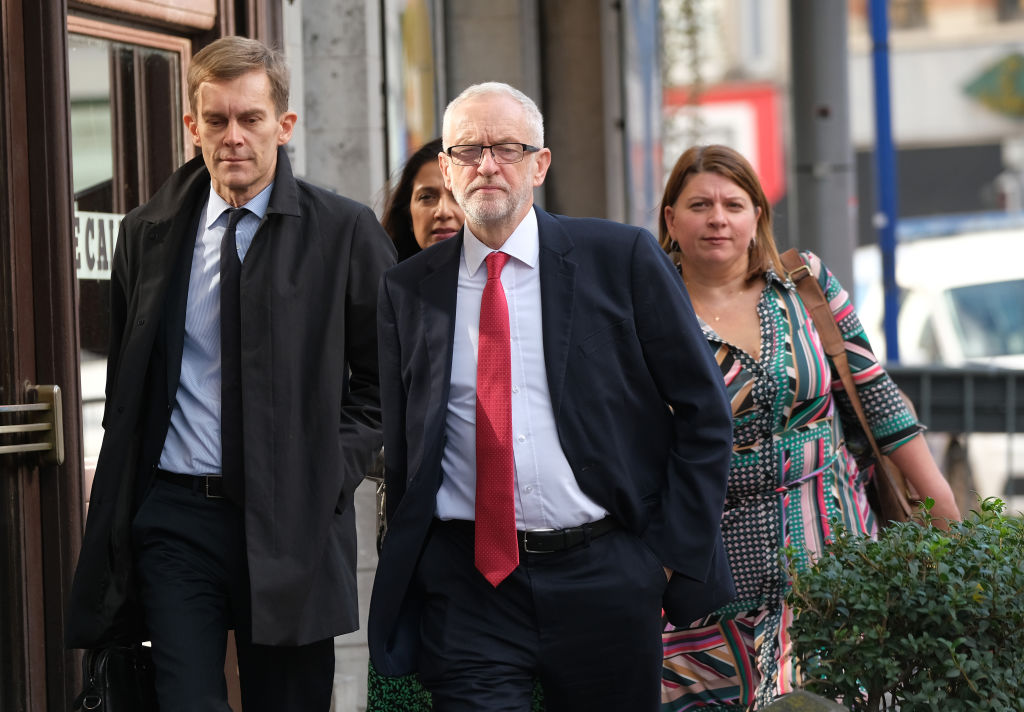
Leader of the British Labour Party Jeremy Corbyn arrives at a gathering of European socialists prior to a summit of European Union leaders on October 17, 2019 in Brussels, Belgium.Sean Gallup / Getty
The UK electorate is off to the polls again, for the fourth general election in a decade. While Parliament wrangles over the exact date, the December election promises a number of firsts: the first December election since 1923, the first winter election since 1974, and the first election not held on a Thursday since 1931.
But it could also be the first election to return a Labour majority since 2005. Polls remain incredibly volatile, and at only ten points ahead, the Conservatives are in a worse position than they were at the start of the 2017 campaign, which saw them lose seats and an overall majority despite beginning twenty-four points ahead of Labour. The hubris Theresa May showed in calling an early election to attempt to increase her majority was rewarded with a bloody nose on election day. Boris Johnson has shown the same hubris, arguing as Theresa May did that he needs a majority to ensure Brexit is delivered.
In the days before the parliamentary votes on an early election, the Tories briefed that they were unequivocally confident, certain of a huge Labour defeat, and of Johnson’s personality persuading millions to return to voting Conservative. Now that Labour have backed an election, many Tory MPs are far more nervous, with one claiming it is a “suicide mission.” The Conservatives know this is a huge gamble: voters may feel they’re being taken for granted and switch parties, but the biggest risk to the Tories is the Brexit Party standing in hundreds of seats, arguing that Johnson has failed to deliver Brexit by the date he was promised, and eating away at the Conservative vote, allowing Labour to take the lead in Tory marginals.